Artificial identities · Lyfera · 2026-10-07
What does a robot add to a runway?
A robot can change the subject of a fashion presentation. How to give an artificial presence a clear relationship to the clothes, the performers and the sequence.
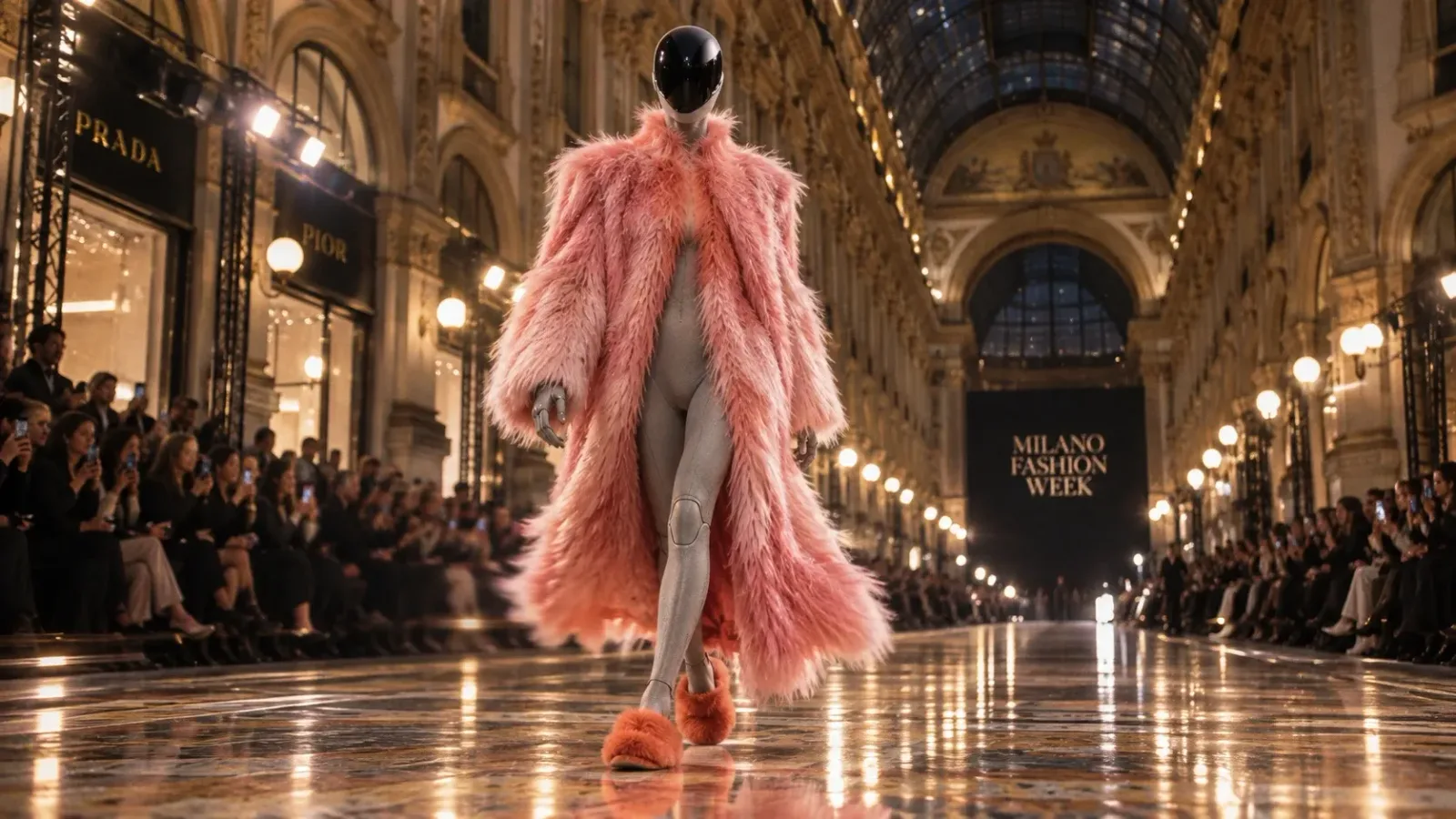
A machine enters a fashion presentation and the subject changes. The audience might have been looking at a sleeve, a silhouette or the way a garment moves. Now the presence of the machine becomes another thing to interpret. For a creative director, the useful question is what that change contributes to the work. A surprising entrance can make a moment recognisable while leaving its relationship to the collection unresolved.
At Vogue World in Milan on 22 September, four humanoid robots appeared in the segment called The Age of Intelligence. In Vogue's account published the following day, creative director Juan Costa Paz described their presence as a way of representing the beginning of robotics. This is the organiser's stated intention, rather than a measured account of what every spectator understood.
The scene offers a specific question for people developing artificial identities: what job does an artificial presence have within a presentation? A physical robot and a digital character have different means of appearing. Neither acquires a useful role simply by looking unusual. The role has to connect the presence to something the audience can encounter in the work.
Decide what the audience is meant to notice
Consider an invented presentation for a collection built around rigid outer layers and soft linings. The team proposes a mechanical figure alongside a human performer. That contrast could direct attention towards the clothes: one passage might expose the structured shell, while another reveals how the lining folds. It could also become an unrelated interlude in which the machinery attracts attention while the garments remain incidental.
Those are different creative proposals even if they use the same figure. Before approving the entrance, the team can describe what the audience should notice during it. If the answer concerns the collection's construction, the staging needs to make that construction visible. If the answer concerns the encounter between bodies and machines, that encounter needs development of its own. Naming innovation as the theme leaves both decisions open.
Our discussion of art direction in AI fashion photography asks why subject, garment and setting belong together. A live presentation adds the question of what happens between them. The figure's arrival, its relation to another performer and the moment it leaves can each change the reading. The programme needs to give those changes a purpose.
A mechanical body and a digital identity require different briefs
An artificial talent may be conceived as a continuing fictional identity whose appearance is developed through images and other creative work. A robot on a stage is also a physical object sharing space with people and garments. Describing both as artificial can be useful at the level of theme, but it leaves essential differences out of the production brief.
In the hypothetical collection, a physical figure would require the organisers to understand the actual equipment, the permitted performance and the conditions of the venue. A film featuring a digital character would require a different plan for framing, editing and presentation. A rendered gesture cannot serve as evidence that a machine can perform the same action in front of an audience. Nor does a physical appearance establish how much of the performance is controlled, rehearsed or autonomous.
The artistic proposal can remain ambitious while its description stays exact. If the team is planning a projected scene, it can explain how that scene relates to the live performers. If it is planning a physical intervention, its account should describe what is actually being staged. The distinction gives collaborators something concrete to develop without turning a mood image into a promise about equipment.
Let the garment have a role in the encounter
Return to the invented collection. Suppose a coat looks compelling in a static image of the mechanical figure, but the proposed presentation makes its lining impossible to see. The image has established one relationship between body and garment; the performance is offering another. Whether that change is useful depends on the purpose of the scene.
The team could revise the passage so that a human performer opens the coat beside the figure, allowing the interior to become the subject of the encounter. It could instead decide that the machine represents a deliberately closed form, while a later passage supplies the contrast. Both are possible directions for this hypothetical work. The choice needs to be legible in the sequence, rather than explained only in the internal brief.
This also limits what a presentation can claim about clothing. A striking association between a garment and an artificial body does not establish how the garment fits, feels or behaves on a customer. Those questions need their own evidence. The creative scene can explore a material idea without being asked to answer every product question that its imagery might invite.
Review the passage before selecting its headline image
A single frame can make an intervention appear resolved. The sequence may reveal a different picture: a long interval without a readable action, an entrance that interrupts an important garment detail, or an exit that leaves the relationship unexplained. These are possibilities to examine in a rehearsal or rough presentation, not claims about the Vogue event.
Our exploration of performance timing considers how a pause becomes meaningful when something happens within it. The same editorial question can guide the invented collection's planning. What changes between the figure's entrance and its exit? What information becomes available? If the answer is only that the audience has seen an unusual object, the team can decide whether that is sufficient for this particular passage.
The final photograph still matters. It may be the way many people first encounter the work. Its caption should identify the presentation accurately, and its selection should reflect a moment the sequence can support. A useful image can open a conversation about the staging without replacing the staging as the thing being judged.
For Lyfera, the continuing identity gives creative work a subject to return to. An appearance becomes more interesting when that subject has a clear relationship to its surroundings. The runway question therefore reaches beyond robotics: why does this presence belong here, and what becomes possible because it is here? Answering it gives novelty a direction the next piece of work can develop.