Fashion & image · Lyfera Editorial · 2026-09-08
AI fashion photography starts with a point of view
A coat, a wall, an interval of light. A practical editorial approach to giving an AI fashion image a clear idea before producing variations.
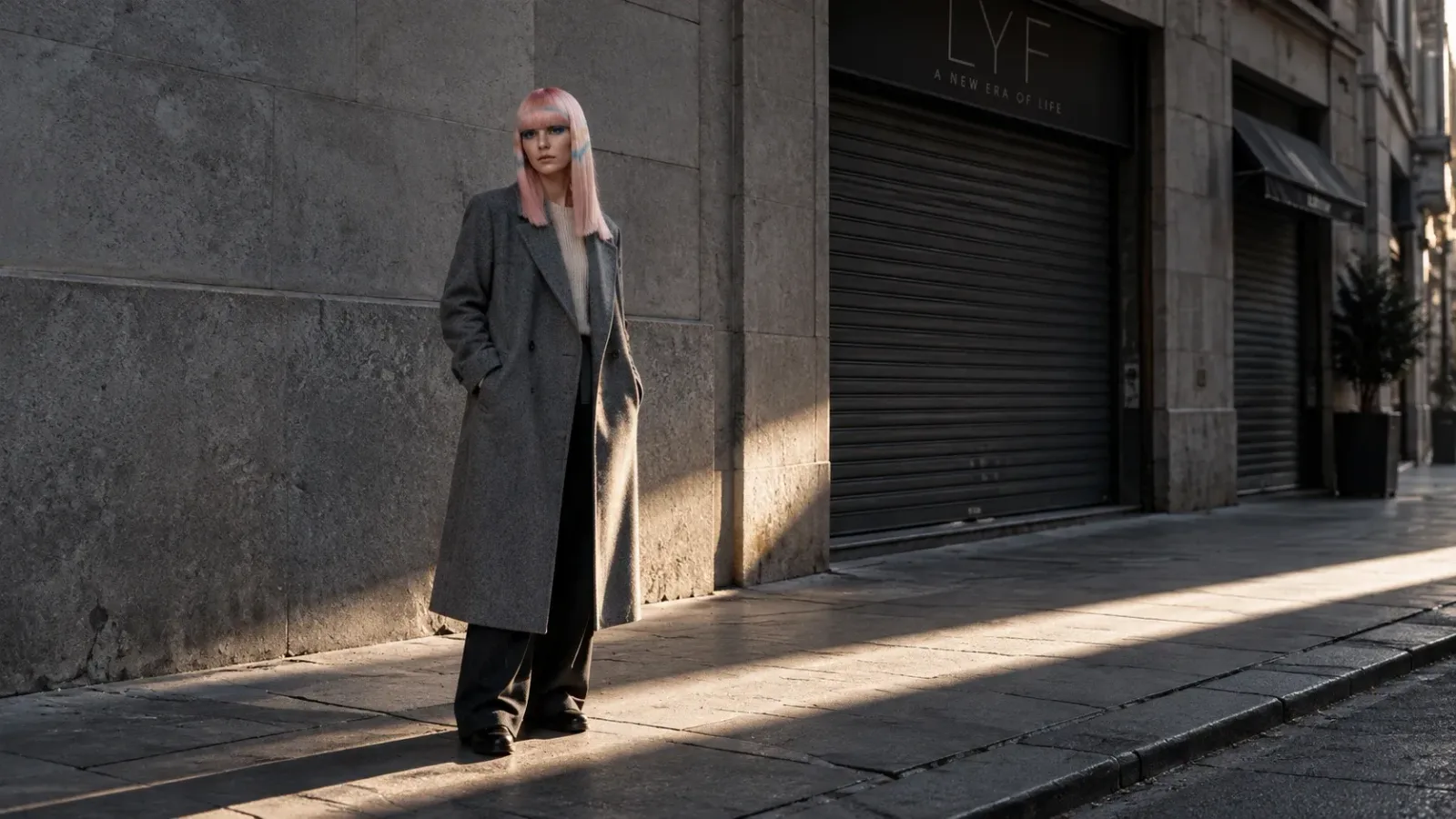
A grey coat against a grey wall can feel precise, sombre, anonymous or quietly extravagant. The garment has not changed. Distance, light, posture and the space around it have changed what we notice.
AI fashion photography gives a creative team another way to construct that relationship. The practical challenge is deciding what the image should say before asking for variations. “Editorial” is a category. “Cinematic” is a mood. Neither tells us why this coat, this subject and this setting belong together.
A useful brief makes that relationship visible. It gives the talent something to do, the clothes a reason to be there and the viewer a detail worth returning to.
Fashion images have always made worlds
The V&A's history of fashion photography traces a field shaped by both artistic ambition and commercial purpose. Its examples range from the apparent spontaneity of street life to elaborate constructed fantasies. The photograph can describe a garment while also proposing a way to inhabit it.
That history is useful because it moves the discussion beyond the novelty of the production method. A picture needs an idea even when its means of production are new. An unusual location or an expensive-looking surface cannot supply one automatically.
For an artificial talent, the world also needs to suit the subject. A convincing face placed in an unrelated succession of beautiful settings may produce variety, but it offers little sense of perspective. Art direction begins by choosing which surroundings help this particular identity become legible.
Write the scene before collecting adjectives
Consider a hypothetical editorial about waiting for the city to wake. The subject stands beside a closed shop, carrying a light jacket. The street is quiet; the first hard line of sunlight reaches the pavement. There is no need to invent a dramatic destination. The small interval before activity is the subject.
From that premise, several decisions become easier. The stance should allow stillness. The clothes need shapes that remain clear in a long frame. A restrained palette can leave room for the sunlight to matter. An extravagant evening look might also work, but it would change the story into the end of a night rather than the beginning of a morning.
Write those consequences into the brief. Describe the intended relationship between pose, garment and setting. Keep the words that affect what can be seen. If removing an adjective changes nothing about the decision, remove it.
The hypothetical scene is a planning exercise, not a claim that a talent visited a real shop or attended an event. This distinction becomes especially useful when the finished image is realistic enough to resemble street photography.
Let the clothes do some of the talking
Fashion direction needs more than an attractive person. Ask where the eye should meet the garment. At the shoulder? Along a sleeve? In the way a hem sits above a shoe? Those choices influence framing and pose before they influence colour grading.
For a fictional look, material descriptions help establish an intention: a crisp fabric holds an edge; a softer one suggests a different fall. The generated result still needs to be inspected. Naming a fabric does not prove that the image represents its actual weight, construction or behaviour.
When a real product is involved, separate the visual concept from the product reference. Check the details that identify the piece, including closures, seams, proportions and branding. A pleasing invention can be useful in a mood study and unacceptable in an image meant to show what a customer will receive. The intended use determines how exact the representation must be.
The same care applies to the body. A posture can create movement without distorting the person. Review the hands, the relationship between limbs, and the way the garment meets the figure. A fault should be corrected because it interferes with the image, even if the overall atmosphere is persuasive.
Selected talents
Build a sequence with different jobs
An editorial sequence gives each frame a purpose. A wider view can establish the setting. A closer image can reveal the attitude. A detail can make the fabric or an accessory worth noticing. Their value lies partly in how they change the reading of one another.
Try describing the job of each frame in a few words before producing it. “Establish the waiting.” “Show the jacket carried loosely.” “Find the first sunlight.” These are working notes, not captions. They give the edit something more useful to judge than three versions of the same attractive pose.
When the sequence is assembled, remove the image that repeats a job already done well. More frames can make a story feel less resolved. A short edit may leave a stronger impression because its changes of scale are easier to feel.
Review the brief against the actual image
Place the original brief beside the final selection. Start with meaning: does the scene still communicate the chosen idea? Then look at continuity: is the talent recognisable across the frames? Finally, inspect the details that the intended use makes important.
Keep the review specific. “The jacket reads as heavy, but the brief calls for a light layer” is actionable. “Make it more premium” could send the next attempt almost anywhere. Describe the visible mismatch and change the smallest part of the direction that addresses it.
The caption deserves the same discipline. It can add a point of view, identify the artificial nature of the image or explain the editorial premise. It should not manufacture a real attendance, collaboration or endorsement. An imagined morning can remain an imagined morning. Good direction often becomes quieter as it becomes more exact. The coat, the wall and the interval of light are enough when each has a reason to be there.
See the artificial identities in the Lyfera roster, or browse more perspectives in the Journal.