Culture & perspective · Lyfera · 2026-09-29
Give an AI character time to react
A recognisable character still needs a readable performance. A rough timed sequence can make pauses, reactions and transitions available for discussion before the final animation.
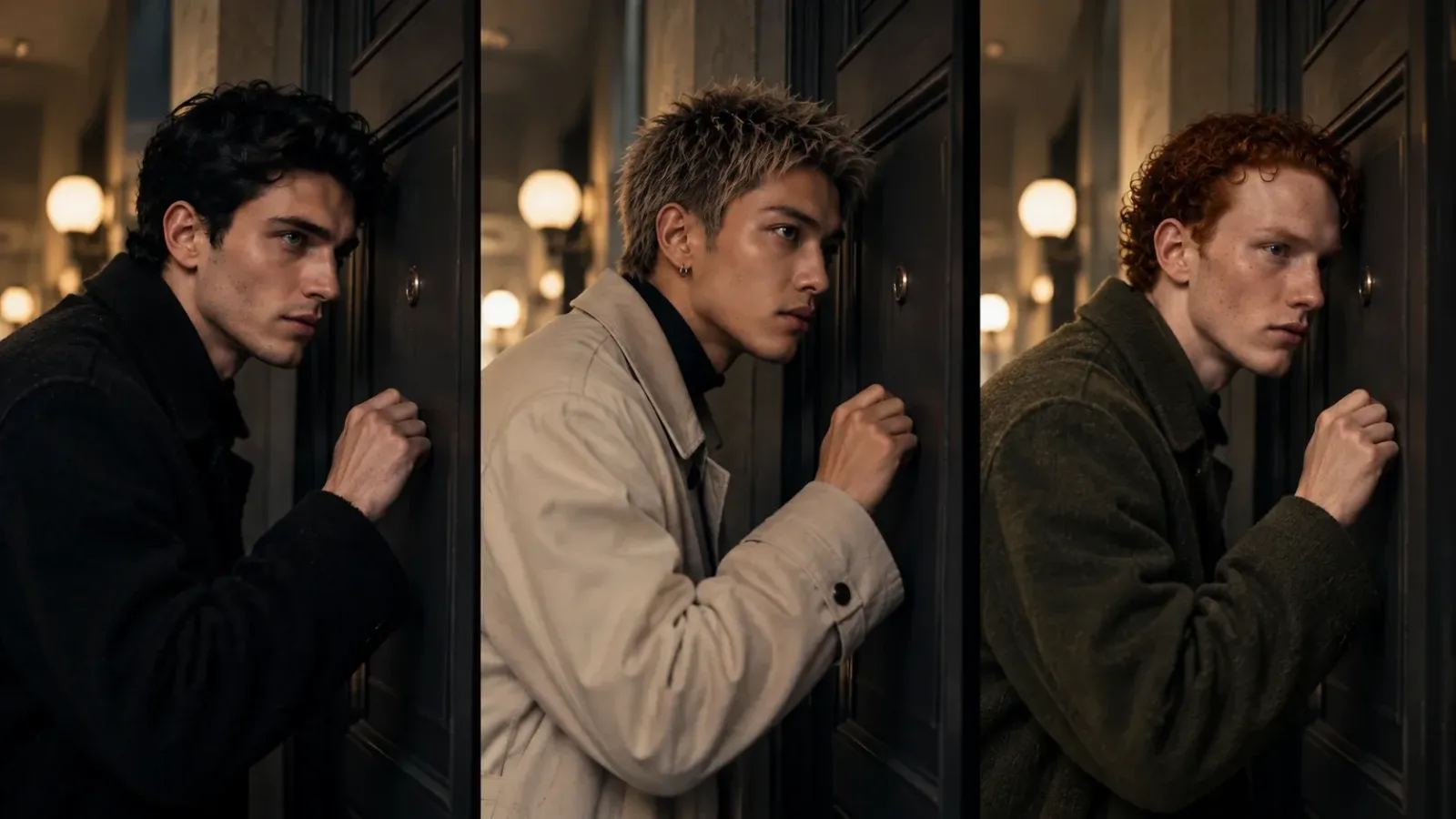
Imagine a fictional talent arriving at a closed door, hearing a noise from the other side and deciding whether to knock. Three attractive frames could describe the whole scene. They would not tell us how long the character listens, whether the hand rises immediately or what the audience understands before the knock. Those intervals are part of the performance. Choosing them changes the character even when the face and setting remain identical.
For a creative team exploring an artificial identity in moving image, this is a useful question to settle before pursuing a polished sequence. A portrait establishes a presence; a scene gives that presence time to do something. The transition needs more than movement added to a still. It needs a relationship between what happens, what the character notices and when the viewer is allowed to notice it too.
Watch a rough version before asking for a finished one
An animatic is a preliminary sequence in which storyboard images are arranged in time. It allows a team to watch the proposed scene unfold before developing its final animation. The ScreenSkills-developed occupational standard for preparatory visualisation includes timing, transitions, temporary dialogue, sound and rhythm among the things a plan should communicate. This is an established animation practice, not a new technique invented for generative AI.
For the door scene, a rough sequence could use a drawing of the approach, another of the character listening and a third of the raised hand. A temporary sound would mark the event that interrupts the approach. The purpose would be to test whether the decision to knock is legible. A beautifully rendered hallway would contribute little to that particular test if the relation between noise and response remained unclear.
This is a different stage from defining the visual identity discussed in our exploration of artificial characters for film. Here, the identity and premise can already be settled. What remains open is the performance within the scene. A rough sequence gives collaborators something they can watch together instead of asking each person to imagine the timing from a paragraph.
Distinguish a pause from an empty interval
Try two versions of the hypothetical scene. In the first, the character hears the noise and knocks at once. In the second, the character listens, lowers the hand slightly and then knocks. The events are similar, but the proposed attitude differs. One reading might suggest confidence; another might suggest hesitation followed by resolve. Neither is an automatic truth about the character. They are interpretations the team can compare against the intended story.
The pause needs something to carry it. A sound continuing behind the door, a change in the hand or a shift of attention gives the interval a purpose. Simply holding an attractive frame for longer may leave the viewer waiting without learning anything. When reviewing the rough cut, describe what changes during the wait. If nobody can identify it, reconsider either the duration or the action.
There is no universal number of seconds that makes hesitation convincing. The surrounding sequence matters. A quick arrival followed by stillness offers a different contrast from an approach that has already been slow. Compare the passage in context, including what comes immediately before and after it, rather than approving the pause as an isolated effect.
Let sound reveal what the picture cannot show
The unseen noise gives the door scene information without requiring another shot. It might be a chair moving, a conversation stopping or a small object falling. Each choice suggests a different reason for the character to listen. A temporary track is useful here because the team can test the relationship before committing to the final sound treatment.
Try the same pictures with the noise arriving earlier, then later. In one version the audience may hear it before the character appears to respond; in another the sound and reaction may seem immediate. Watch what those arrangements invite the viewer to infer. The exercise is an editorial proposal for this invented scene, not a claim that a particular arrangement produces the same emotion in every audience.
Temporary dialogue deserves similar care. A gap before an answer can carry thought, uncertainty or a change of intention. The words alone do not settle which. Read the exchange aloud against the images and leave enough room to hear what the response is doing. Adding music can be explored afterwards, so that its emotional direction does not become the only reason an otherwise unclear exchange appears to work.
Keep the timing provisional enough to learn from the result
Once a sequence is useful, its timing can inform the next production brief. Describe the action that must occur, the information the audience needs and where a transition belongs. An intended duration is a planning reference; it is not evidence that a generated clip will obey every detail. The delivered movement still has to be inspected within the edit.
Suppose a new clip contains a convincing listening gesture but reaches the knock too early. The team can examine whether a different cut preserves the intended hesitation or whether the performance needs another attempt. The rough sequence makes the problem specific. It also leaves room for a result that improves the scene: a small unplanned movement might express the decision more clearly than the original drawing.
This discussion concerns a way of developing moving-image work, not a claim that Lyfera currently supplies an end-to-end animation editor. An artificial talent can be a visual starting point while storyboarding, sound and editing retain their own production requirements. The practical test is whether the sequence lets the audience read an action and its consequence. A recognisable face helps us know who is at the door. The time before the knock helps us understand what they are doing there.