Artificial identities · Lyfera · 2026-10-08
When a styling detail should stay uneven
An uneven cuff or displaced collar can carry a precise creative intention. How to decide which styling details to preserve when directing an artificial talent.
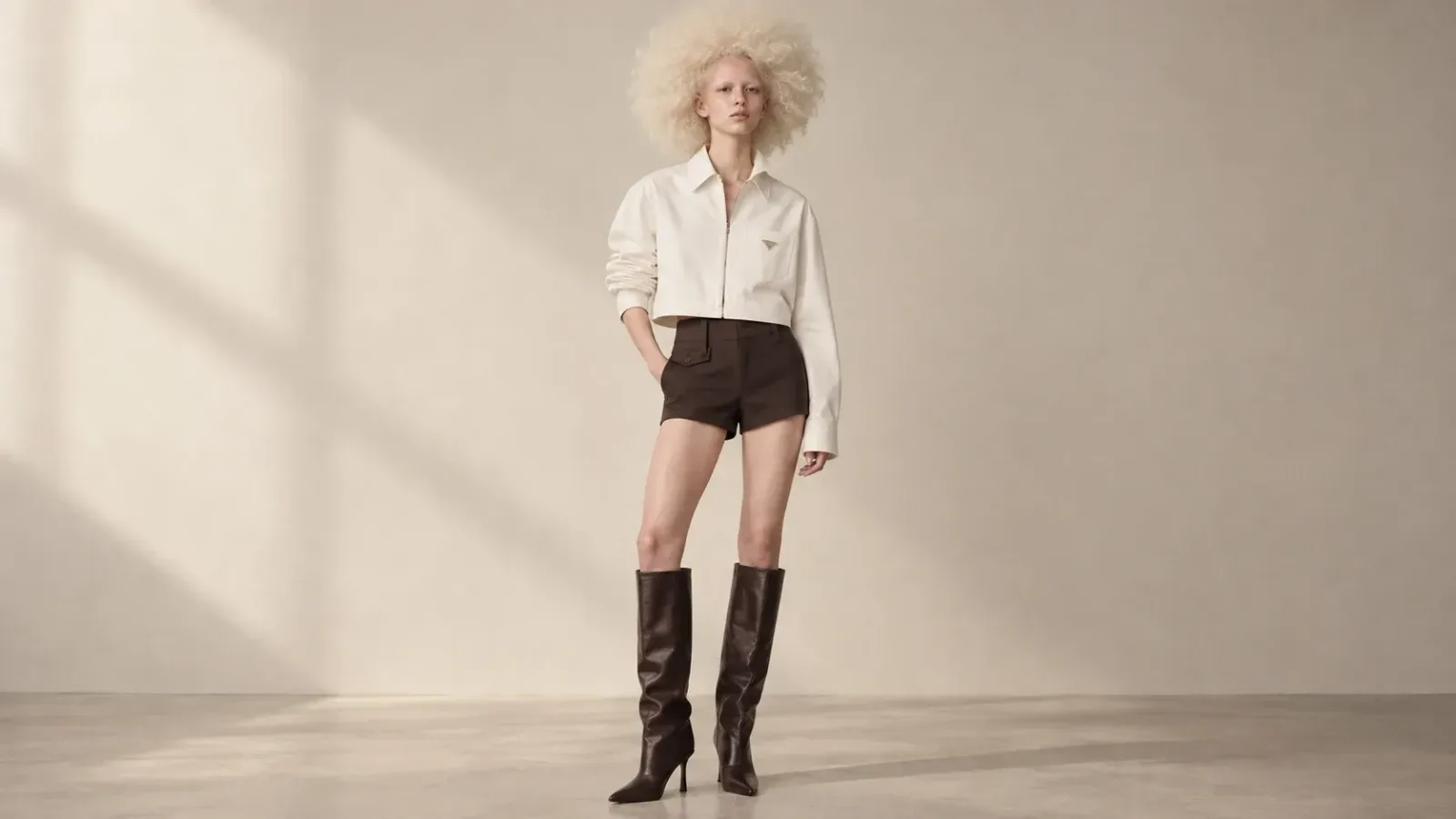
A collar sits higher on one side. A sleeve has been pushed back while the other reaches the wrist. In a fashion image, either detail might be a problem awaiting correction or the reason the composition holds our attention. The difference becomes especially consequential when directing an artificial talent: a reviewer needs to decide which irregularities belong to the styling before asking for a cleaner image.
The question has acquired a timely setting. In an opinion piece published on 7 October, Teen Vogue writer Kelsey Stiegman interprets deliberately disordered runway styling as a response to AI polish. That is a critical reading of fashion, rather than evidence about what audiences prefer or what a generation system can produce. It opens a useful editorial question: what, exactly, would be lost if a particular detail were straightened?
For a mentor developing an artificial identity, that question can be more productive than a general instruction to make the image imperfect. An uneven detail can establish a relationship between a figure and their clothes. It can also become decoration applied indiscriminately, with little connection to the character or the scene. The work lies in deciding which reading the image supports.
Give the irregularity something to do
Consider a hypothetical portrait series about a fictional character who dresses with great attention to proportion. In one image, a long shirt cuff extends beyond a jacket sleeve. The exposed fabric repeats a pale vertical shape elsewhere in the composition and makes the hand feel more withdrawn. Shortening the cuff might improve conventional neatness while weakening the intended relationship between clothing, posture and space.
That is a specific reason to preserve the detail. It does not require a claim that the character dressed in a hurry, forgot something or experienced a difficult morning. Those explanations introduce events into the fictional life. They should be chosen deliberately if they matter to the story, rather than supplied afterwards to justify an image the team happens to like.
Now imagine the same character in a second portrait, with every edge displaced and every fastening loosened. The result might be compelling, but it would ask a different question of the identity. Is the character experimenting with a new silhouette? Has the series moved towards theatrical costume? Does the accumulation of effects obscure the proportion that originally mattered? Reviewing those alternatives gives the mentor a basis for selection beyond how convincingly casual an image appears.
The history of fashion offers room for such judgement. The Metropolitan Museum of Art's 2017 exhibition on Rei Kawakubo examined work that challenges conventional ideas of beauty and fashionability. It is historical context for questioning a standard of finish, not a new exhibition or a recipe for reproducing a designer's language. An unusual silhouette can have a coherent purpose even when conventional tidiness would suggest changing it.
Describe the choice precisely
An instruction such as “make the styling less perfect” leaves a great deal unresolved. It might mean a different arrangement of fabric, a looser posture, softer lighting or surface wear. Those changes affect different parts of the image. Asking for all of them together can make it difficult to understand which change improved the work.
For the hypothetical cuff portrait, the direction could specify a visible length of shirt fabric beneath one jacket sleeve, with the other sleeve remaining at the wrist. The relationship between the hand, the fabric and the crop can then be considered together. The description communicates a styling intention without demanding a particular emotional response from every viewer.
This precision also helps during review. A clean seam can remain necessary while the cuff stays uneven. A hand should retain a readable structure even when fabric partly covers it. Keeping an intentional deviation does not oblige the team to accept unrelated visual failures. The intended feature and the surrounding construction can be assessed on their own terms.
Our discussion of garment fidelity in AI fashion images concerns what must remain accurate when representing clothes. Here the question is narrower: which arrangement has the creative team chosen to preserve? When an actual product is involved, that choice still needs to respect the garment being shown. Inventing a damaged fastening or a different construction to make an image more expressive would change what the picture communicates about the item.
Let the choice survive a sequence
An isolated portrait can make a displaced sleeve look accidental. A second frame can clarify whether it belongs to the styling, although repetition alone does not make the choice successful. The composition still needs to give it a role.
In the imagined series, a closer frame might reveal the cuff beside a relaxed hand, while a wider view shows how its length relates to the jacket. These are proposed images, not a record of an existing Lyfera shoot. Comparing them would help a team decide whether the feature remains useful at different scales. If it only works in one crop, that may be a good reason to keep it local to that image.
There is no need to turn every successful irregularity into a permanent character trait. A talent can wear a carefully balanced outfit in one editorial and something more disrupted in another. What matters is whether the new choice has an intelligible relationship to the assignment. A clear point of view in art direction gives that change a purpose without reducing the identity to a fixed collection of visual tricks.
Finish includes deciding what to leave
A final review can return to the detail itself. Does the cuff still shape the pose as intended? Has a later edit removed the relationship that made it useful? Would straightening it help the reader see the clothes, or simply bring the image closer to a familiar convention? The answers may favour correction, preservation or a different frame altogether.
For an artificial talent, looking a little disordered does not establish a human life behind the picture. The image remains constructed, and its context should make that origin clear. Its creative value can rest on something more concrete: someone noticed the effect of a detail, considered the alternatives and chose to keep it. A finished editorial can leave the collar uneven because the people directing it know what that unevenness contributes.