Fashion & image · Lyfera · 2026-09-22
The garment has to survive the image
A convincing fashion image can quietly change the clothes. Product-led work needs a separate standard for construction, proportion and material appearance.
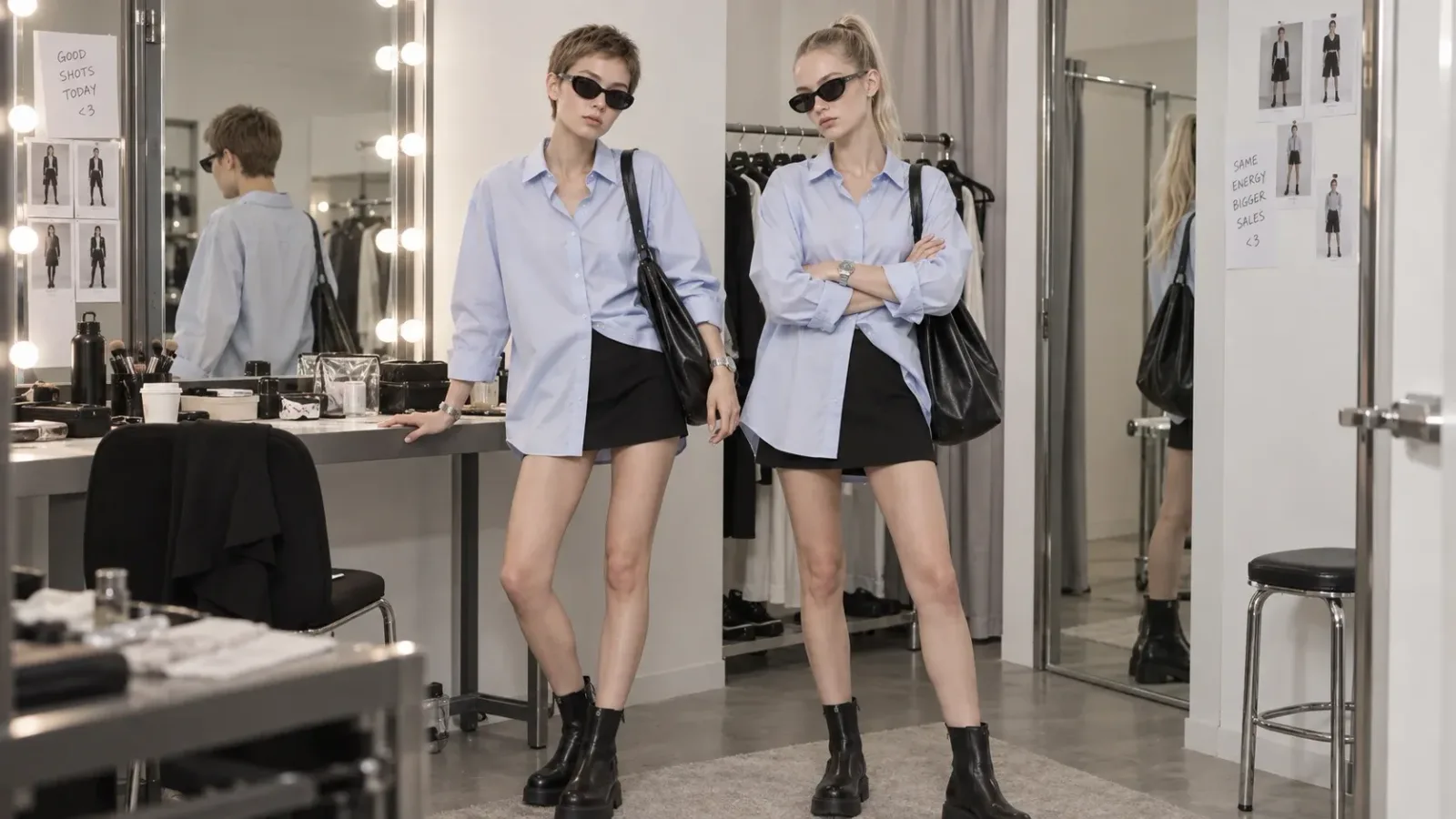
A fashion image can become more persuasive while becoming less faithful to the clothes. A jacket acquires a cleaner shoulder, a dress falls with more weight, or a fastening disappears into a surface that now looks beautifully uninterrupted. In a speculative editorial, such changes may belong to the idea. Beside a product description, they can give the viewer a mistaken impression of the object being offered. The difficulty is that the visual improvement often makes the discrepancy harder to notice during a fast review.
Artificial models and generative scenes make it possible to explore a garment in many contexts, but the team still needs to decide which parts of the image are open to invention. The subject may be fictional while the jacket is a real product with a specific construction. A setting may be imagined while the colour is intended to represent an existing sample. Treating the whole picture as equally flexible loses the distinction between creative interpretation and information that someone may use to judge the garment.
An editorial image and a product image answer different questions
An editorial can ask what a collection feels like: severe, playful, protective, ceremonial. A product image is also expected to help the viewer understand what a particular piece looks like. These purposes can coexist, but one cannot simply stand in for the other. A compelling atmosphere does not establish the position of a pocket, the shape of a cuff or the way a fabric responds to light. When those details are important to the intended use, the review has to return to the garment rather than the mood of the picture.
The commercial context is already explicit in services such as Botika, which presents AI fashion imagery for brands and on-model product work. Its offer is evidence that this is an active production category; it is not independent proof that every generated image preserves every detail. A commissioner still needs an acceptance process suited to the actual garment and intended placement. The relevant question is what has been checked in the image being delivered, not what a category of software promises in general.
Our earlier article on reading an AI fashion image separates the subject, clothes and caption. For a product-led commission, that distinction can be taken further. Each part of the garment makes a visual statement: a seam suggests construction, a highlight suggests surface, and a fold suggests weight or tension. An editor does not need to infer every physical property from those cues. They do need to notice when the image has begun to describe a different object.
Decide which details cannot be improvised
Consider a hypothetical navy jacket with a three-button front, a narrow welt pocket and a visible seam across the sleeve. The creative brief may allow a different background and an artificial subject. It may also allow the pose to change. Those permissions do not imply that the buttons can become two, that the pocket can acquire a flap, or that the sleeve can be smoothed into a different construction. A good-looking substitute is still a substitute when the assignment concerns that particular jacket.
The reference material should make these distinctions inspectable. A frontal photograph may show the fastening clearly while concealing a sleeve detail. A close-up may reveal the weave but say little about the overall silhouette. The useful set is the one that answers the commission's questions, including areas likely to be hidden by a changed pose. More files are not automatically more informative. If two references disagree because they show different samples or colourways, that conflict should be resolved before it becomes a choice left to generation.
The same discipline applies to the talent. Our discussion of visual consistency across images concerns the features that let a subject remain recognisable. Product work requires a second reference standard beside that identity. The talent can be preserved while the jacket drifts, or the jacket can remain convincing while the person changes. Combining both judgements into a single impression of whether the image looks right makes it easier for one successful part to distract from another that needs correction.
A picture of drape is not a fit assessment
Some distinctions become clearer when comparing production methods. Browzwear's description of VStitcher places garment development alongside pattern work, materials and digital samples. Its technical guidance explains that an image added as a fabric receives default fabric physics. Even within a garment-simulation workflow, the appearance of a material and the information used to model its behaviour are separate concerns.
That distinction helps explain why a pleasing generated fold should not be treated as evidence about how a garment will fit a customer. The image may suggest a plausible arrangement of cloth without establishing the underlying measurements or material behaviour. For a creative concept, plausibility may be enough to communicate the idea. For a claim about a specific product, the team needs evidence appropriate to that claim. A visual resemblance can support a comparison, but it cannot answer every question that a physical sample or a qualified fit review would address.
An invented example makes the editorial consequence concrete. If a stiff fabric appears soft around the elbow, the picture may communicate ease that the sample does not have. A dramatic pose could make a short jacket seem longer, even without visibly changing the hem. Neither discrepancy has to be malicious to matter. They are reasons to examine the intended impression alongside the literal details, particularly when the image is placed close to product information rather than presented as an imagined fashion scene.
Review the garment before approving the atmosphere
The first pass can concentrate on construction, proportion and visible detail against the approved references. The next can consider whether the subject and pose introduce a misleading impression, followed by a review of composition and mood. Separating these judgements does not require separate teams or a complicated scorecard. It requires enough attention that an attractive face or an effective lighting treatment cannot settle every question about the image at once.
This also makes revisions easier to explain. “The lower pocket has changed shape” names an observable problem. “It does not feel premium enough” may express a legitimate reaction, but it does not tell the person revising the work which feature to preserve. Precise feedback helps retain successful choices while correcting a discrepancy. It also makes it possible to compare the revised image with the earlier version and confirm that the requested repair has not introduced a different change elsewhere.
Lyfera's approach to art direction begins with the purpose of an image. In a product-led brief, that purpose includes deciding what the clothes are allowed to promise. An artificial talent can give a composition a distinctive presence, while the garment remains the reference against which the product details are judged. Before approving the finished image, the team should still be able to place the sample beside it and explain why the viewer is seeing the same piece.