Creative practice · Lyfera Editorial · 2026-09-08
Keeping an AI talent recognisable across images
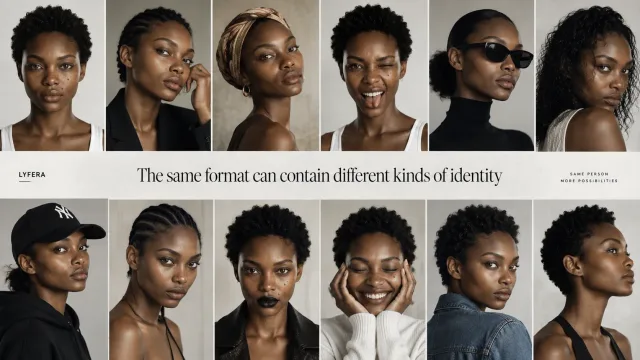
A stable reference lets a talent change expression, setting and wardrobe without becoming someone else. Recognition still requires a careful edit.

The first portrait is clear. In the next image, the jaw looks a little narrower. By the fourth, the eyes have changed. Each picture may be plausible on its own, yet the sequence no longer introduces one recognisable subject.
Character consistency in AI images is the work of preserving an identity while allowing the picture around it to change. For an artificial talent, that includes the face and the wider physical presence. It also asks the editor to tell the difference between a deliberate change and an accidental replacement.
No useful review begins with the assumption that the reference has guaranteed the result. The image still has to be looked at.
Give the identity a stable reference
In its guide to character references, Runway describes using a clear source image to guide appearance while a prompt directs the scene. Its advice includes visible facial detail, straightforward lighting and a background that does not compete with the subject. These are practical reference principles, rather than a guarantee that every output will preserve every feature.
A good identity reference has a different job from a campaign photograph. The campaign may benefit from shadow, motion or an obstructed view. The reference needs to make the subject easier to inspect. It should help an editor recognise the identity without first interpreting a complicated visual effect.
Keep the approved reference separate from experiments. Give it a name and a version that another person can find. The distinction may seem administrative until two collaborators work from different portraits and begin correcting towards different faces.
Look beyond hair and styling
A recognisable haircut can distract from a changed face. So can a repeated jacket or a familiar background. When reviewing a sequence, mentally remove those cues and consider the structure beneath them.
Look at relationships: the spacing of the eyes, the balance of the lower face, the profile, the way the mouth sits above the chin. These observations are editorial checks, not biometric measurements or evidence about a real person's identity. Their purpose is to notice whether the fictional subject remains coherent.
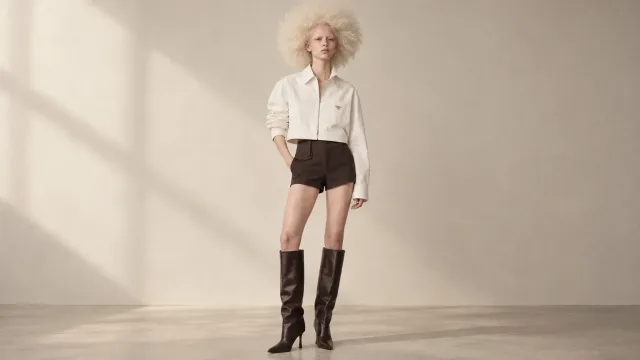
The body deserves attention as well. A head that seems familiar can sit on a figure with quite different proportions. Comparing only tightly cropped portraits will miss that change. Use the views appropriate to the output: a headshot for a portrait, a fuller reference when the image depends on the silhouette.
Distinctive details can help, but avoid turning them into a checklist that overrides the whole. A preserved mark or freckle does not compensate for a substantially different face. Recognition is the combined impression of the subject, examined with care.
Separate a new scene from a new identity
Imagine a fictional sequence that moves from a studio portrait to a windy outdoor setting. The expression, hair movement and light may all change. Those are expected consequences of the direction. A newly shaped nose or a different apparent age would require another explanation.
Write the allowed changes before reviewing the image. This keeps the judgement attached to the brief. Otherwise, an accidental difference can become acceptable simply because the result looks good.
The same principle applies to intentional evolution. If a talent receives a different haircut, record that decision and its place in the story. Preserve the earlier reference as history. An edit to appearance should not silently rewrite every previous encounter.
A stable archive allows variation to be deliberate. It also makes it possible to revisit an earlier choice without asking a new generation to remember something that was never clearly supplied.
Make comparisons easy to see
Place the reference and the proposed image beside each other at a useful size. Start with the full impression, then look closely at the features that seem uncertain. If the camera angles differ greatly, use the nearest available view rather than forcing a comparison the reference cannot support.
Review a sequence together before approving its individual frames. An image that appears acceptable in isolation may introduce a visible jump when placed between two others. The edit is the unit of continuity, even when each file was produced separately.
Record a short, concrete reason for rejection. “The profile no longer matches the approved lower face” is more useful than “doesn't feel right”. The next attempt needs a visible problem to solve. If the source itself is ambiguous, improving or clarifying the reference may matter more than expanding the prompt.
There is no need to grade every image with a number. A written observation and a clear decision can be enough. A score becomes useful only when its meaning and limits are understood by the people making the selection.
Preserve the person through the edit
At Lyfera, the talent is the continuing subject. The image is one appearance of that subject. That order matters when a spectacular result arrives with the wrong identity: the picture should not acquire authority simply because it is beautiful.
The public talent roster includes approved studio views that make this question visible. A set of reference views can establish an introduction; it does not, by itself, demonstrate that every future scene has already passed review. Continuity remains a decision made with each new piece of work.
The surrounding story needs a similar discipline. A caption cannot repair a visual mismatch by insisting that the face is the same. Nor should a convincing picture establish a biographical event on its own. Visual approval and narrative accuracy are related responsibilities, with different evidence behind them.
Leave room for expression
Once identity is treated carefully, expression has more room to change. The subject can turn away, laugh, become still or occupy a smaller part of the frame. The reference does not have to become a pose repeated indefinitely.
That is the point of keeping a talent recognisable: the next image can offer something unfamiliar without asking the reader to meet an entirely different person. A coherent sequence lets attention move from “is this the same face?” towards “what do I notice about them now?”