Culture & perspective · Lyfera Editorial · 2026-09-08
How to read an AI fashion image
The subject, the clothes and the caption each make a different promise. A guide to enjoying an artificial image while understanding what it represents.
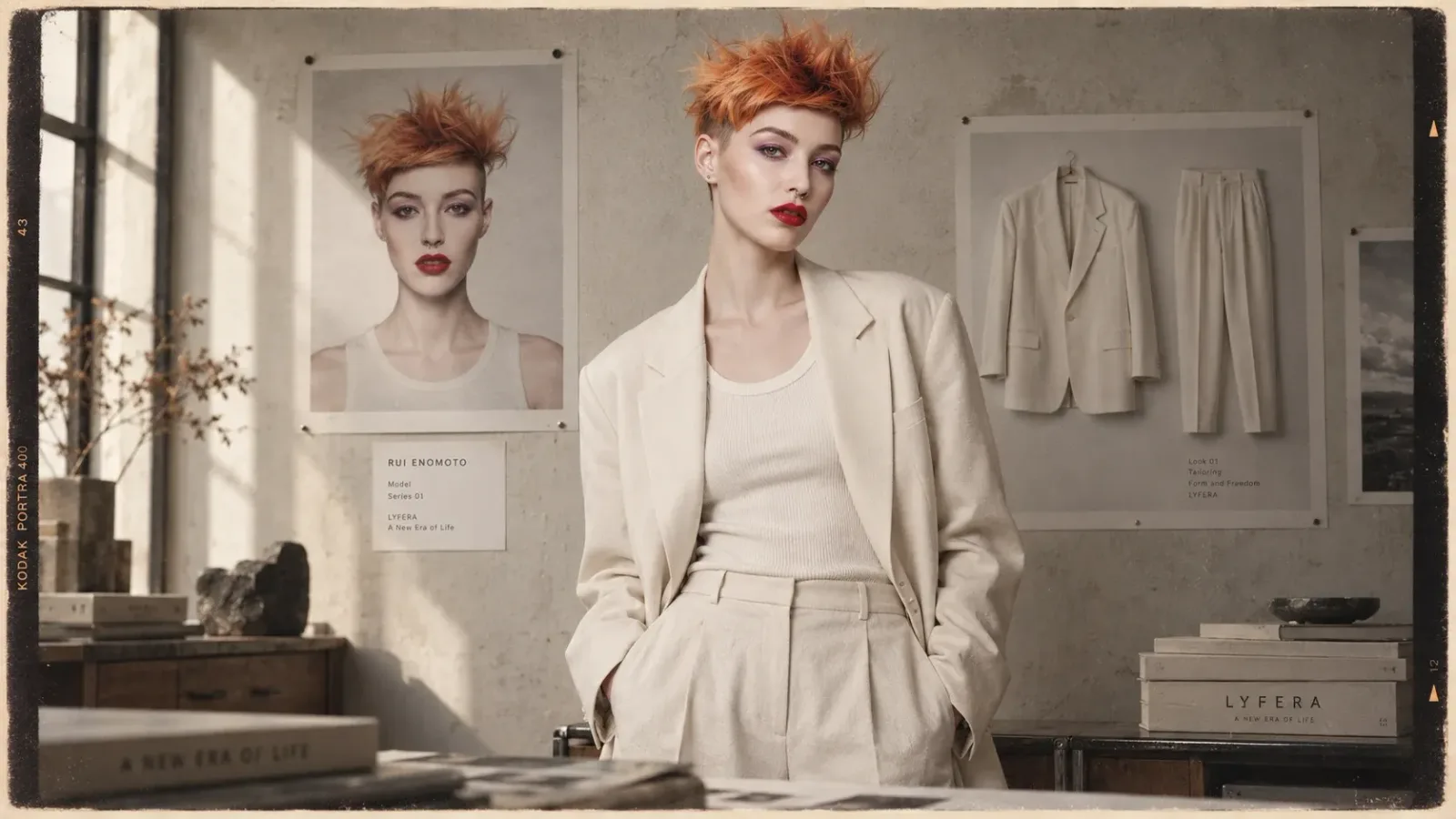
A beautiful image can leave an ordinary question unanswered: what am I looking at? The person may be artificial. The clothes may be imagined. The location may borrow the appearance of a familiar city without recording a visit to it.
Those differences affect how we read AI fashion images. A concept for a collection, a portrait of a fictional talent and a picture intended to show a product can all be compelling. Each asks for a different kind of trust.
The clearest editorial approach gives the reader enough context to understand the image while they are looking at it. A brief label can do useful work. The caption, credit and surrounding page can do the rest.
Start with the subject
An artificial talent is a constructed identity. A digital replica represents an existing person. Knowing which appears in a picture changes the questions a reader might reasonably ask about participation, authorship and representation.
For an original artificial talent, the introduction should state that origin in ordinary language. A fictional subject does not need a fabricated human biography to make the image interesting. Nor does the absence of a real model mean that no human creative decisions shaped the work.
At Lyfera, artificial origin is part of the introduction. The mentor's role gives the work a human point of responsibility: someone makes selections and guides what becomes part of the talent's public identity. The talent's voice may speak from within a constructed life, while the surrounding presentation keeps that construction legible.
Ask what the picture is claiming
A portrait can establish an appearance without documenting an occasion. Add a caption saying “backstage tonight”, and the same picture begins to imply an event. Add a brand name, and it may also suggest a relationship that the image cannot establish by itself.
A useful reading habit is to separate what is visible from what is asserted. You can see a figure in a room. You cannot infer from the pixels alone that the figure attended a particular show, wore a commercially available garment or worked with the company named nearby.
Editors can use the same habit before publication. Read the caption as a set of claims, then identify what supports each one. An imagined editorial can be introduced as an imagined editorial. A real collaboration needs its own factual basis. Atmosphere should not quietly do the work of evidence.
Clothes carry their own questions
An AI image of a fictional outfit can explore proportion, colour and mood. A product image has another responsibility: helping someone understand the item being offered. The visual language may overlap, but the promise is different.
If the image is a concept, say so where the distinction matters. If it depicts a real garment, look for enough context to understand what has been generated or altered. An appealing drape or perfectly placed closure should not be taken as a measurement of fit or construction.
This is an editorial distinction, not a claim that every fashion image must become a technical diagram. Readers can enjoy fantasy and still deserve clarity about which parts of a commercial presentation describe an actual product.
The creator can help by keeping the credit attached to the image and writing captions that identify the intended use. A specific sentence is more informative than a vague assurance about responsible innovation.
Provenance answers a narrower question
Content Credentials offer one way to attach information about a file's origin and history. The C2PA explainer is explicit about the limit: provenance can help establish where content came from, but cannot by itself establish that its subject is true, accurate or factual. The history may also be incomplete.
That distinction is worth keeping in mind when a credential or verification symbol appears beside a picture. Information about creation and editing is valuable. It does not replace a careful caption, support an unrelated commercial claim or prove that a depicted event took place.
The absence of a credential does not settle the opposite question either. Read the available context and consider the source. Avoid treating a single visual badge as a complete judgement of the work.
This discussion describes the standard's purpose. It does not claim that Lyfera currently attaches C2PA credentials to its images.
Credit the work without inventing a production
An AI-assisted image may involve concept development, character direction, styling decisions, reference selection, generation and editing. Credits can identify the work that actually happened. They should not imply a physical shoot, a photographer's attendance or a model's participation when none took place.
The same principle applies to a location. “An imagined scene inspired by evening streets” has a different meaning from “photographed in Paris”. The first describes a creative premise. The second makes a statement about production. Choose the one the record supports.
Credit also gives the reader somewhere to locate responsibility. A named studio or editorial team can explain a correction. An artificial subject cannot independently answer for the human choices made around its image.
Clarity leaves room to enjoy the image
Disclosure need not become an essay attached to every frame. The amount of explanation should fit the image and its use. A clearly labelled artificial portrait may need a short credit. A realistic image implying a news event or brand collaboration needs more precise context.
The goal is to let the reader understand the invitation. Is this a visual experiment, a character introduction, a commissioned concept or a representation of a product? Once that is clear, the image can be considered for its composition, style and imagination.
A constructed world can hold our attention without asking us to mistake it for a record of the physical one. Good fashion imagery already knows how to invite us into a scene. Clear context helps us enter it on honest terms.
Visit the Lyfera roster to see disclosed artificial profiles, or continue exploring the Journal.