Culture & perspective · Lyfera · 2026-09-23
An AI talent does not need to fill every day
New consumer research gives creative teams a reason to examine the value of another post. A regular production rhythm still needs room for editorial selection.
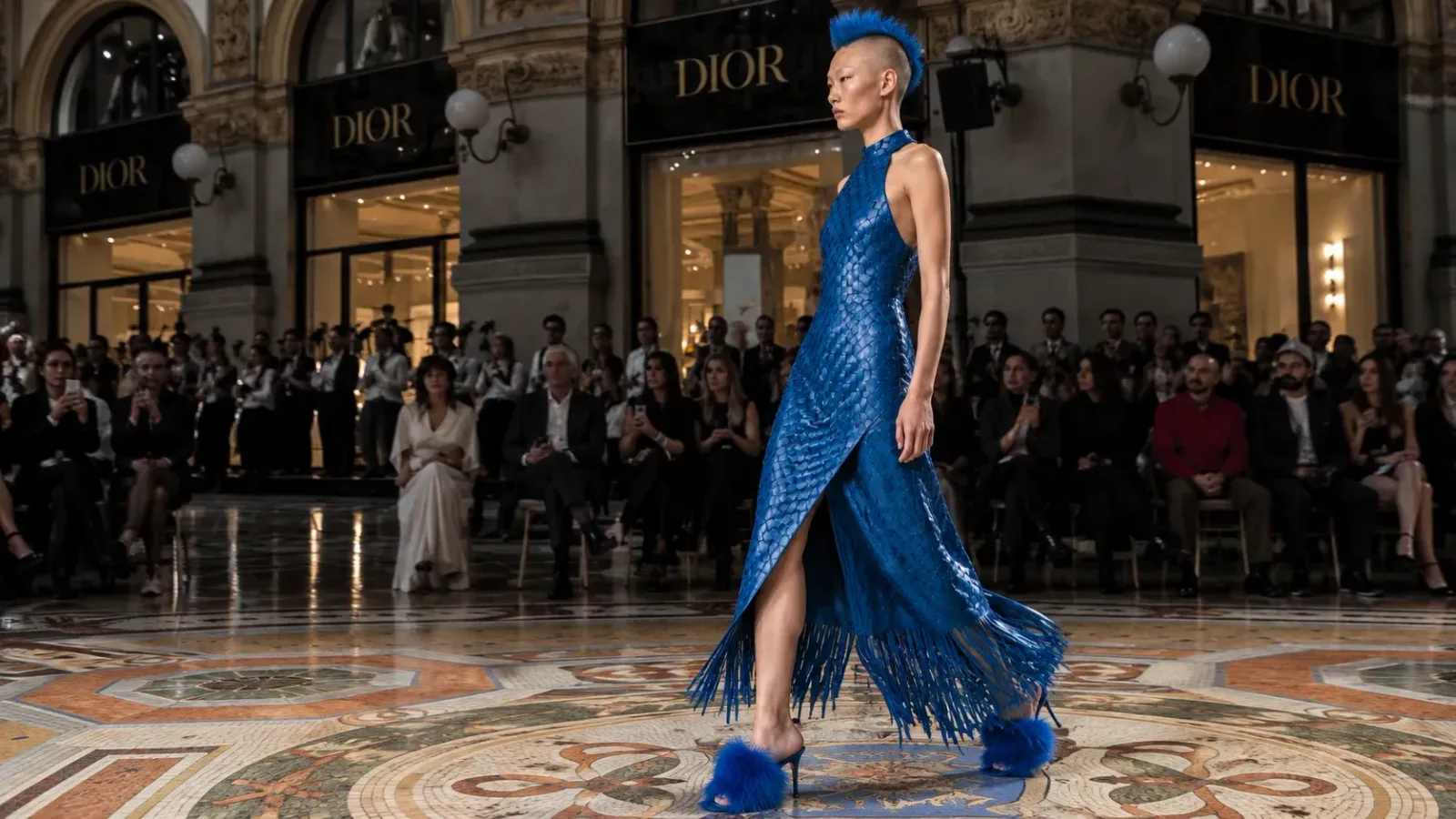
A publishing calendar can be full while the story barely moves. The same face appears in a different room, a familiar thought acquires a new caption, and another polished image arrives because the schedule has an empty square. For a team working with artificial talent, the ability to produce variations makes this an unusually easy habit to develop. The harder decision is whether the next appearance gives a returning reader anything they did not already have.
That decision has a timely context. In a research release published on 22 September, Gartner reports that 65% of respondents believe brands produce too much AI-generated marketing content, while 35% say they rely less on influencers for shopping information and recommendations because of AI. The survey involved 1,006 US consumers and was conducted in May and June 2026. These are reported attitudes from that sample, not a measurement of how often any particular artificial talent should post. They offer a reason to examine the value of another appearance before treating production capacity as a publishing target.
A new image can repeat an old editorial decision
Visual variation is easy to count. There are five settings instead of one, three outfits rather than two, a close portrait beside a wider composition. Editorial variation is harder to identify because it concerns what the reader is being invited to notice. If every image says that the talent has impeccable taste, the sequence may contain considerable production work without developing its subject. The location changes; the proposition remains untouched.
Consider a hypothetical series about a character's interest in small urban gardens. The first piece introduces a rooftop plot. The second moves to a courtyard but offers the same admiration for greenery. A third places the character beside a beautiful greenhouse with another general observation about nature. Each could work as an individual image. Together they leave several possible questions unexplored: what attracts this character to cultivation, which constraints interest them, and what would make their choices different from anyone else's?
The answer is not necessarily a more elaborate fictional biography. A stronger next piece might examine why a small patch of shade matters to the composition, or compare two ways of arranging limited space. It could reveal a preference by making a specific choice. The useful distinction is between changing the scenery and advancing the subject. Our discussion of what makes an artificial talent worth following concerns the identity behind those choices. A publishing decision asks whether this particular piece earns another encounter with that identity.
Give the next piece a question of its own
Before commissioning another image, an editor can describe the question it should answer in an ordinary sentence. For the garden series, that might be how a sheltered corner changes the character's attention to the city. The assignment now has something to investigate. If the proposed caption could be placed under every previous image without changing its meaning, the brief probably remains too broad.
This is also a way to distinguish a useful return from a duplicate. A subject can deserve more than one article, particularly when a new development changes what can be said about it. Returning to gardens after a documented exhibition, a new research finding or a genuinely different creative experiment might open a fresh question. Merely replacing the title and choosing a new portrait does not. The source of novelty should be identifiable before the work begins, rather than supplied afterwards by promotional language.
Research helps when it changes the question. A date on a web page is not enough: an updated page may describe an old event, and a popular discussion may repeat a long-standing concern. The editorial task is to establish what is new, what remains uncertain and why the distinction matters to this audience. A fictional character can provide a point of view on that material without being credited with attending an event, testing a product or having an experience that never occurred..
Separate making from publishing
A regular production rhythm can still be useful. It gives a team time to explore, compare and reject work. The mistake is making every completed asset an obligation to publish. A folder of finished images is an inventory of options; it is not evidence that an audience needs to see them all. Editorial restraint becomes easier when a draft can remain a draft without being treated as wasted effort.
Imagine that the garden brief produces three strong compositions. One establishes the relationship between buildings and plants. Another shows essentially the same relationship from a slightly different angle. The third introduces a detail that makes the character's preference more precise. Selecting the first and third gives the sequence a change of scale and purpose. Keeping the second privately preserves the work without asking it to perform a public role it does not have.
The same separation matters for captions and facts. A promising observation may need a better source before it can support an article. A beautiful sentence may imply an event that belongs only to an abandoned proposal. The record described in our article on character memory and editorial continuity helps preserve those distinctions. A deadline should not turn an unverified idea into part of the talent's public history.
Review what the sequence adds
The relevant unit of review is sometimes the run of work, rather than the individual post. Place several proposed pieces beside the recent archive and read their opening claims without looking at the images. If they all introduce the same idea, the visual variety may be concealing repetition. Then reverse the exercise: look at the images without the captions and ask whether the sequence gives the writing anything specific to respond to.
This review should remain connected to the intended audience. A product explanation may earn its place by resolving a recurring question. An editorial portrait may earn it through an unfamiliar treatment of a familiar subject. A research-led article may clarify a distinction that a news headline obscures. These are different forms of value, and none can be established solely by counting outputs. The criterion should be clear enough that someone can explain why a finished piece was kept back.
For the human mentor central to Lyfera's approach, the practical consequence is a publishing rhythm that leaves room for judgement. Prepare work regularly, keep the source material available and let the public sequence reflect deliberate selection. Some days the next piece will be ready and worth sharing. On others, the more useful work will be improving a brief, checking a claim or waiting for a question that the existing archive has not already answered.