Culture & perspective · Lyfera · 2026-09-29
Who does the work after the image is generated?
The image file is only part of a campaign delivery. Clear responsibilities, usable feedback and defined revisions make the remaining work visible.
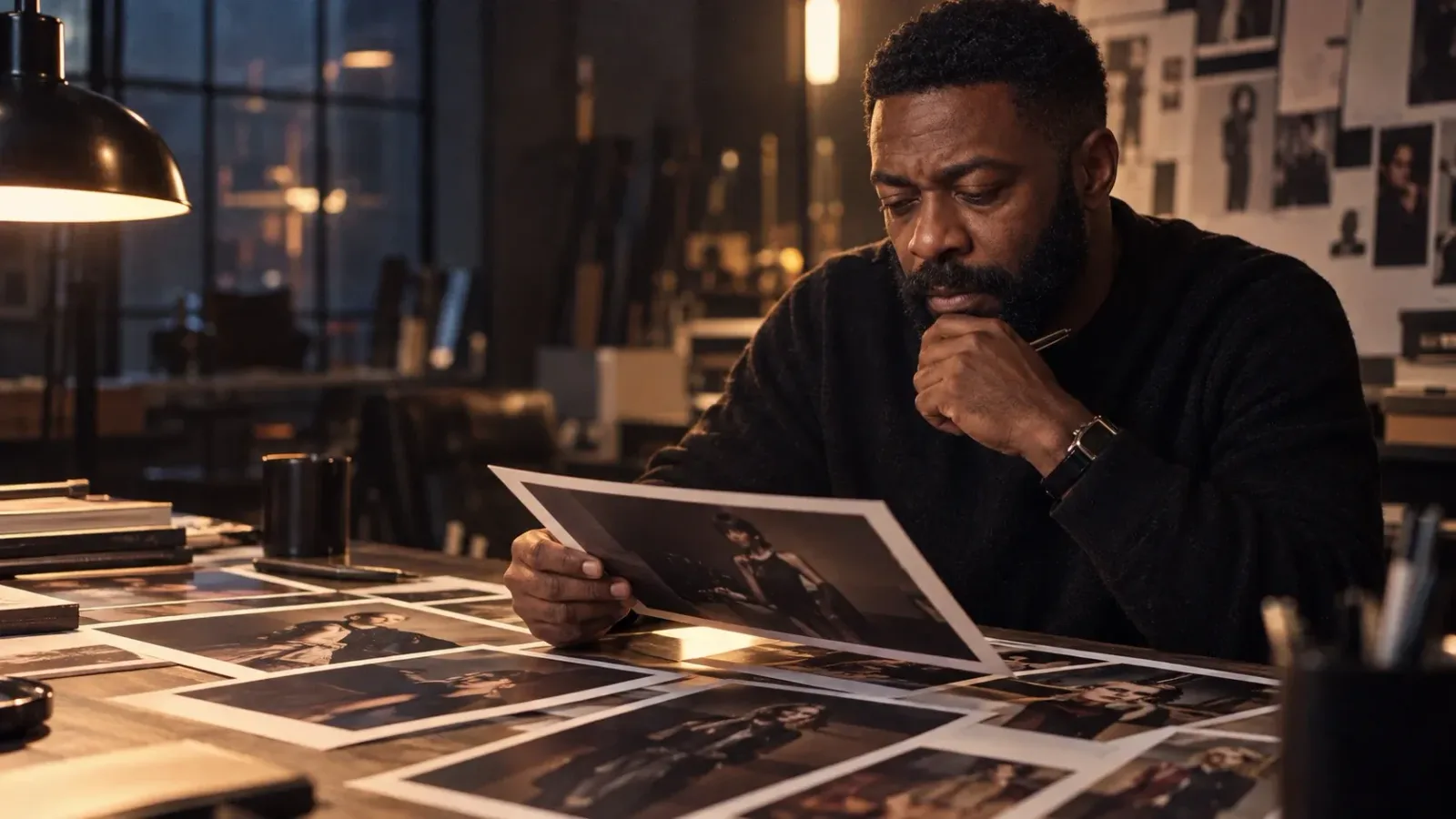
A folder of campaign images arrives before anyone expected it. The faces are convincing, the clothes look plausible and there are enough options to fill a presentation. Yet the delivery still needs someone to compare the images, resolve conflicting feedback, check what the captions claim and decide which files are ready to use. The production has reached a visible milestone. Whether the team has reached the end of its work is another question.
For a brand commissioning an artificial talent, the useful planning unit is the accepted piece of work. A generated file is one part of that delivery. The surrounding decisions need time, a person responsible for making them and a shared understanding of what happens when the brief changes. Otherwise, a short generation stage can sit inside a project whose remaining work has barely been described.
A current question about creative labour
A review published in AI and Ethics on 1 September 2026 examines generative AI and cultural work through the fashion industry. Helena Moreira da Silva, Sandra Regina Rech and Ana Julia Dal Forno discuss how creative tasks can shift towards curation, validation and oversight, and question whether productivity gains necessarily improve the conditions under which people work. Their analysis draws on existing literature; it is not a time study establishing a universal saving or cost for an AI campaign.
That distinction gives commissioners a useful starting point. The research raises a question about how work is organised, rather than supplying a formula for a project estimate. The production approach proposed here is narrower: make the work between generation and acceptance explicit. It is an editorial recommendation for planning a commission, not a claim that Lyfera has measured these effects across its users.
Define the delivery before counting the options
Consider a hypothetical brief for three portraits of an artificial talent, each intended for a different placement. The commission could end with three selected image files. It could also include crops, captions, product checks and preparation for publication. Those are different deliveries, even if both begin with the same three portraits. A team comparing proposals needs to know where each one ends.
Describe the output at the level where someone can accept it. A homepage portrait might need space for a heading, while a narrow mobile crop needs to preserve the subject's expression. If both placements are required, they belong in the assignment before the first selection. Discovering the second placement at the end creates another design problem; it does not become a trivial export merely because the source image already exists.
The same care applies to information in the image. When a commission depicts a real garment, someone needs to know which product details must be checked and against what reference. Our article on garment fidelity in AI fashion images addresses the visual judgement. The production brief should also identify who is equipped to make that judgement and who can resolve an uncertain detail. A reviewer cannot approve information that has never been supplied.
Give feedback a route to a decision
In the hypothetical portrait commission, imagine that one reviewer asks for a tighter crop while another needs more room around the figure. Both comments may be reasonable for their own placements. Sending them together as an instruction to improve the image leaves the person doing the work to discover the conflict. The next delivery may simply move the disagreement into another file.
A useful arrangement gives someone responsibility for reconciling feedback before another round begins. That person should understand the placements and be able to state whether the team needs one compromise or two separate versions. The role does not require a large organisation. In a small project, the commissioner and creative lead can be the same person, provided the decision is actually made.
Corrections and new directions also deserve separate treatment. Fixing an output that misses an agreed requirement is different from replacing that requirement after seeing a successful result. If a restrained portrait was approved and the team now wants a crowded evening scene, the new idea may be worthwhile. Calling it a small refinement makes the remaining work harder to discuss. Record what changed so the next estimate refers to the current assignment.
Measure the part of the process you want to improve
A team that wants to understand its own workflow can start with a modest record: when a brief became usable, when a first selection was ready, when feedback was resolved and when the final delivery was accepted. These points separate making images from waiting for information and making decisions. They do not require treating every creative minute as an interchangeable unit.
Suppose the hypothetical portraits were generated quickly but spent several days awaiting a product reference. The practical improvement would concern the availability of that reference. If several rounds instead repeated contradictory feedback, the useful change would concern how decisions reach the maker. Increasing the number of generated options would answer neither problem. These are invented examples illustrating a way to inspect a project, not measured outcomes or promised savings.
The mentor's continuing role in Lyfera's approach makes this distinction relevant beyond a single campaign. Someone has to decide what belongs to the talent and what is ready to become public. A clear production agreement gives that person a manageable decision to make, with the necessary material beside it. The final file can then mark the completion of work the team actually understood, rather than the beginning of responsibilities nobody thought to include.