Artificial identities · Lyfera · 2026-10-10
An artificial portrait needs a useful description
A character caption can carry a voice while leaving the picture out. How useful descriptions make visual decisions available to readers who cannot see the frame.
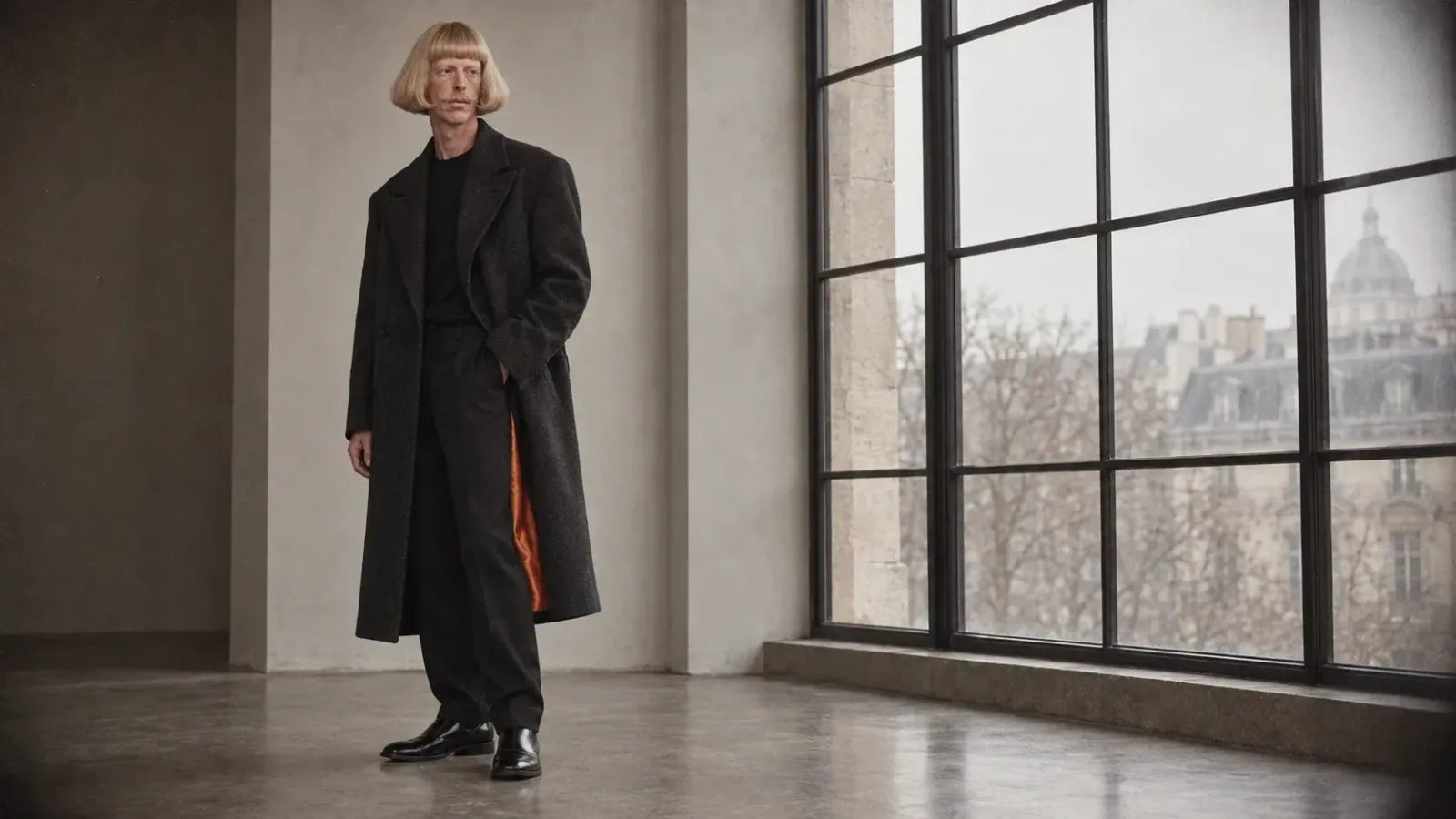
A figure stands beside a window, wearing a dark coat with a bright orange lining. The lining is visible only where one side of the coat opens. That small area of colour might be the reason the portrait exists: it interrupts a restrained composition and gives the clothes a particular energy. A reader who cannot see the image could encounter a caption about quiet confidence and receive none of that information. The caption would preserve the editorial mood while losing the decision that produced it.
This is a hypothetical portrait, but the question it raises belongs to any visual project involving artificial talent. How does someone gain access to the choices in a picture when looking at it is unavailable? A character's name, a campaign slogan and a disclosure of synthetic origin each communicate something useful. None necessarily explains what the picture makes visible. Description deserves its own editorial attention because it carries a different part of the work.
In a September release, RNIB called on broadcasters and content creators to include audio description in their production process. Its research concerned short television drama clips presented as audio, rather than still images or artificial characters. The charity also stressed that access for blind and partially sighted people has value independent of wider audience interest. For a portrait editorial, the useful connection is a production question: when does description become part of making the work available? Applying that question to artificial talent is an editorial proposal, not a result of the television study.
What the picture contributes
A useful description begins with the role of the image where it appears. W3C's guidance on informative images explains that a text alternative should communicate the image's meaning or information, with the purpose and surrounding text determining what is needed. It does not prescribe an exhaustive inventory for every picture. A visual explanation of a garment detail, a portrait introducing a character and an image functioning as a link can require different words.
That distinction matters in fashion. Imagine the hypothetical window portrait accompanying an article about the contrast between a coat's outer surface and its lining. Describing the orange area and where it appears would help a reader understand the argument. If the same portrait introduced a recurring fictional character, posture, face and setting might deserve more attention. The image has not changed, but its contribution to the page has. A description can be accurate and still miss that contribution if it gives equal weight to every object.
The choice resembles art direction: the frame has a reason to exist, and the details serve that reason. Descriptive writing makes those details available in another form. It should give a reader enough information to encounter the visual decision and develop a response of their own, rather than supplying only the response the creative team hoped to produce.
A caption cannot do every job
Cooper Hewitt's guidelines distinguish a short text alternative, a fuller description and a visible caption. They recommend beginning with the important content and organising further detail so that spatial relationships remain understandable. These are useful distinctions for an editorial team: the compact text that accompanies an image need not carry every nuance that a longer description could offer.
For our hypothetical portrait, a short alternative might read: “Artificial character beside a window in a dark coat, with orange lining exposed along the open front.” A fuller description could explain that the figure occupies the left of a vertical frame, while the window lights the exposed lining on the right. Those relationships let a reader understand how the composition works. The description would need to change if the published crop removed the window or concealed the lining.
A fictional caption might instead say, “I wanted one bright thing in the room.” That line establishes a voice and an imagined intention. It can be compelling without describing the image adequately. Keeping descriptive information available alongside the character's voice allows both to contribute. The reader should not have to translate a personality into a guess about the composition.
Describe the result you actually have
Synthetic imagery makes this task unusually vulnerable to intention. A creative brief might request velvet, afternoon light and a reflective expression. The final image may show a smooth dark surface, a bright rectangular opening and a face turned away. Repeating the brief as a description would carry unverified information into a text that a reader may rely on to understand the image. The final frame deserves a fresh reading.
This does not require removing every interpretation from descriptive language. A smile or an exaggerated silhouette can matter to the visual meaning. The difficulty is deciding whether a phrase helps someone encounter the image or simply announces the maker's preferred interpretation. In the hypothetical portrait, “the head turns towards the window” gives a visible relationship. “The character longs for another life” adds a story that the pose alone cannot establish. That story may belong in the fiction, but it should not quietly become a substitute for the visible scene.
Descriptions of recurring characters also need to attend to the particular appearance in each image. A familiar name can identify who is represented; it cannot convey a changed pose, hairstyle or arrangement of clothes. Nor should a visible appearance become a shortcut for guessing cultural identity or personal history. The broader question of how to read an AI fashion image remains relevant, but knowing how an image was made does not provide access to its content.
Leave room for the reader
Human review has a clear purpose here. Someone should compare the descriptive words with the final image in its actual context, asking whether the important relationships survive and whether the text introduces claims the image cannot support. For work intended for regular publication, feedback from blind and partially sighted readers can help reveal omissions that a visual review alone will miss. This is a proposed editorial practice, not a claim that any particular Lyfera workflow already implements it.
An artificial talent can have a carefully developed voice and a recognisable visual presence while some readers receive only its slogan. Description gives the editorial team another way to take the image seriously. The small orange opening in our imagined coat need not stand for confidence, rebellion or optimism before the reader encounters it. It can first be an orange opening, placed in relation to a figure and a window, available for someone else to consider.