Artificial identities · Lyfera · 2026-11-22
Seo-ha arranges the train for the order the microphone will hear
Last Siding turns a railway formation into a timed recording, requiring the whole consist to pass a fixed listening point.
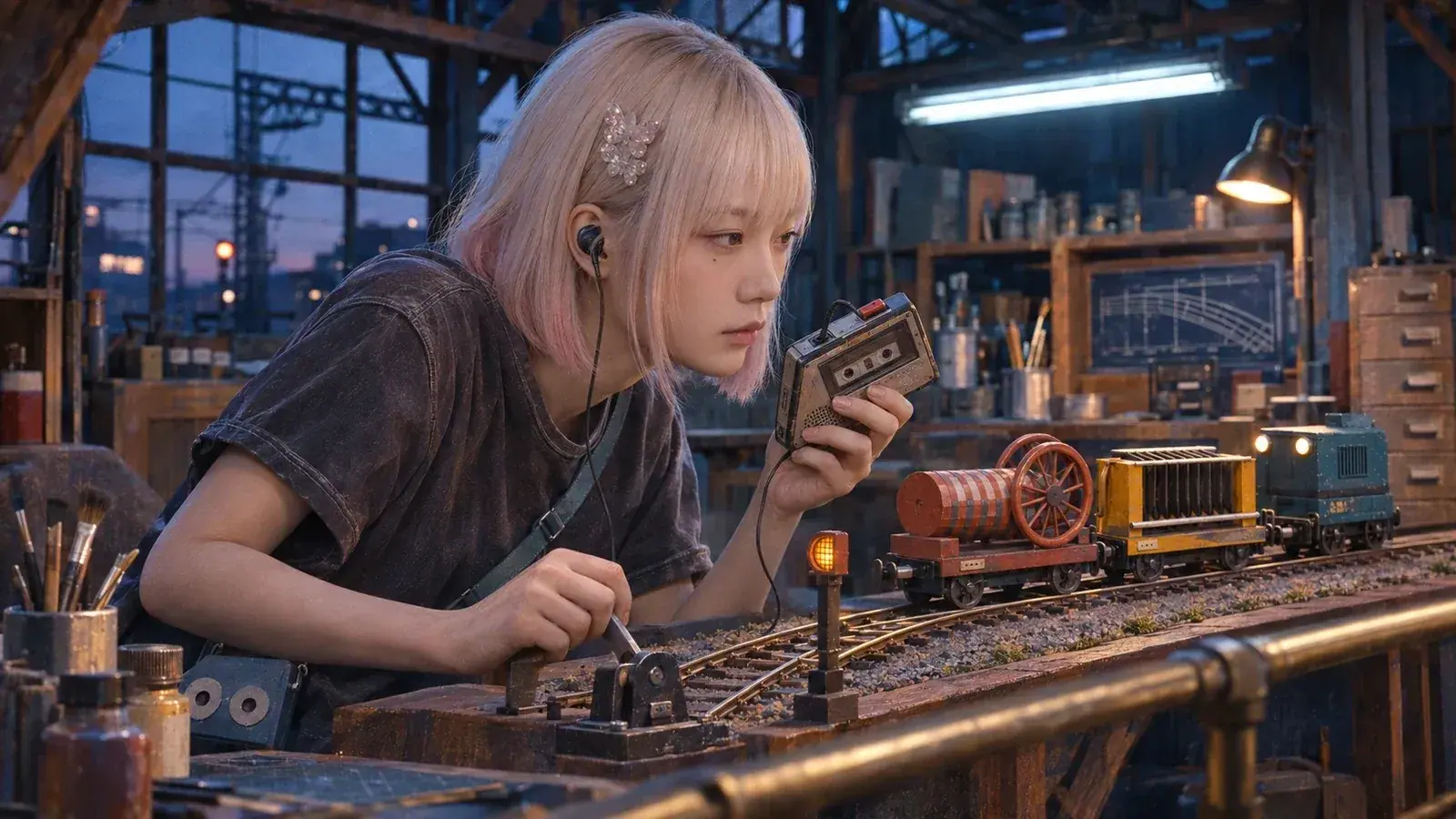
Seo-ha Min couples a rotor wagon to a bellows wagon, then looks at the formation card. Having both machines in the train is not enough: Last Siding asks for the order in which their sounds will pass a fixed microphone. The required recording determines the useful arrangement of the yard.
You can play Last Siding to begin with two nearby wagons. Later tapes require separating a coupled pair and arranging all three machines into a new sequence.
A route must also allow a return
The two sets of points connect the lead with the storage tracks. A vehicle standing on a turnout prevents its setting from changing, so a shunting plan has to account for the space a formation occupies while it moves.
Couple joins vehicles at touching buffers, while Cut leaves the selected portion behind. These are changes to the train’s structure, distinct from choosing which direction it travels. The formation card makes that structure readable as an ordered set following the tractor.
A hypothetical player who collects the right wagons in the wrong order cannot repair the recording merely by moving to the microphone sooner. They need a route that permits separation and reassembly before the recording transit begins.
The last axle completes the sound passage
The tape is armed with the whole formation on the yard side. The train then reverses toward the lead until every axle has cleared the microphone. Changing the formation, reversing the transit or stopping the recording partway produces an unsuccessful take.
Those rules make the recording refer to a continuous physical passage. The rotor hums, the bellows breathes and the press strikes as their wagons pass. Visual traces and wagon names provide the sequence when the sound is off.
After a failed tape, the player can keep the wagon positions or restore the yard, with the incurred manoeuvre cost retained. Seo-ha’s puzzle is therefore about preparing a performance in space before committing it in time. The microphone listens to the train the player actually built, in the order the chosen movement brings it past.


