Artificial identities · Lyfera · 2026-11-22
Berta Vidal has one more question
Two attributed statements turn Berta’s panel show into a game about deciding which question the evidence can support.
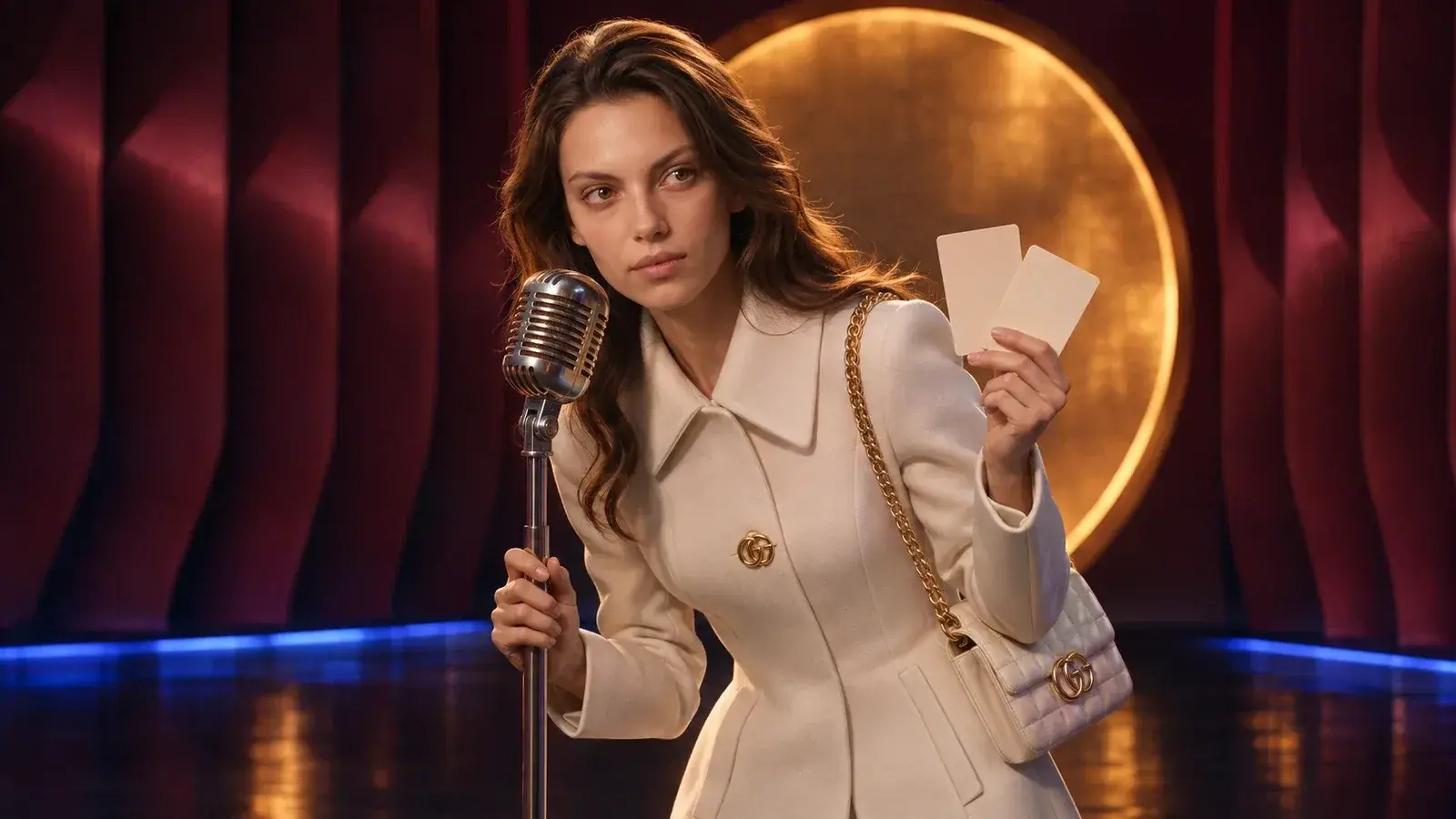
Berta Vidal holds two cards beside a studio microphone. The useful detail is that the cards belong to different voices. In One More Question, a guest can provide a precise account without knowing enough to explain the whole incident. The player has to decide what another person could add before putting a question on air.
To compare the two accounts yourself, play One More Question.
The laboratory edition begins with a cinema audience missing the last reel. Ada’s account of the booth log and Vic’s account of the exit queue concern the same evening from different positions. Listening to one person opens a topic for the other. The investigation therefore develops through an exchange: the next useful question depends on something the player has already heard.
A notebook that keeps the speaker attached
Each statement remains attributed in Berta’s notebook. Linking two lines from the same guest cannot supply the independent comparison the segment asks for. The interface distinguishes that mistake from choosing two different speakers whose statements still fail to explain the case. It gives the player a reason to reconsider the relationship between notes rather than hunt for a differently coloured answer.
That distinction also explains the cover’s two cards. They describe an editorial operation that can be performed in the game. An attractive studio and a recognisable host would introduce a programme; the two notes give Berta a specific responsibility within it. Our essay on leaving a character’s motive open considers what a precise action can suggest. Here the action also has a condition the player can test.
In the recorded revision, repeating an unchanged unsupported pair stopped deducting points again. A newly proposed hypothesis can have a cost; rereading the same rejection should not masquerade as a fresh decision. The current campaign also carries a shared allowance of four unsupported calls. The number matters because it places the three segments in one programme, with consequences that can survive the change of topic.
Asking is only part of the broadcast
A supported question does not end the scene. Berta puts it to the panel, then gives the microphone to the person responsible for the decision. Asking Ada to answer for something that happened outside the booth exposes a gap in her account. Passing the question to Vic allows the correction to emerge from the right speaker.
The revision’s recorded successful desktop run resolved all three segments for 3,000 points. Its touch test also followed the interrupted programme to the off-air ending. These are browser test results from the laboratory edition, not audience research or a claim about a live television production. The guests, incidents and corrections are fiction written for the game.
The microphone consequently marks more than a turn-taking animation. It makes the player assign responsibility for an answer. Berta’s programme becomes interesting at the moment the player can explain why those two notes belong together, why this question follows, and why this particular guest should reply.


