Culture & perspective · Lyfera · 2026-10-03
A second-hand wardrobe asks for a different kind of story
A second-hand garment brings a history that belongs to the object. An artificial talent can offer a new interpretation while keeping ownership, condition and availability grounded in the record.
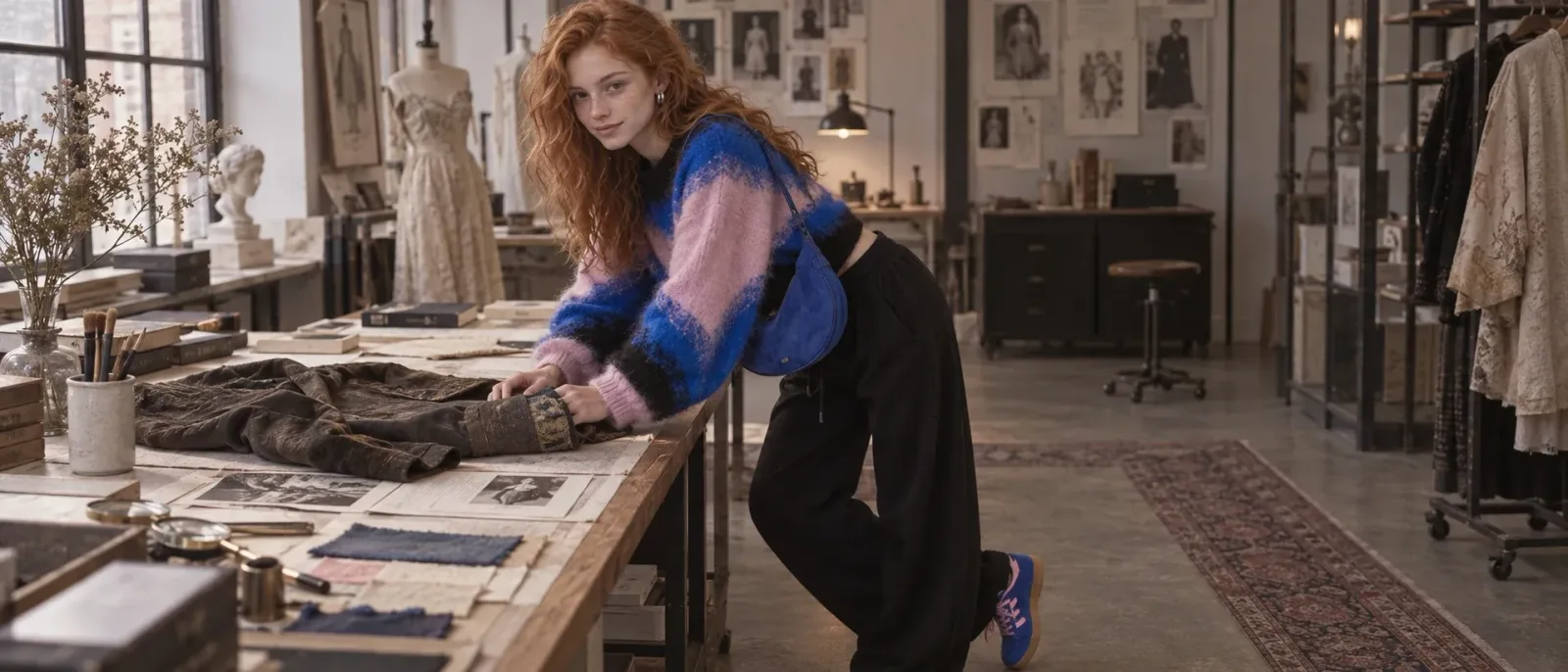
A second-hand jacket arrives with something a newly imagined outfit does not have: a past that belongs to a particular object. There may be a label, a repair, a record of ownership or simply an uncertain date. An artificial talent can give that jacket a new setting and a new attitude, but the character's story cannot supply the missing parts of the garment's history. The creative opportunity lies in bringing those two kinds of narrative together while keeping their sources clear.
September's fashion coverage offers a useful starting point. What's Fashion Technology? described a London runway presentation that connected pre-loved looks with live shopping. In its own description of the Endless Runway project, eBay presents clothes drawn from existing wardrobes, styled for a show and made available to shoppers through eBay Live. That is a description of the format, rather than evidence that it improves sales or reduces environmental impact. Its editorial interest is more immediate: the clothes are already objects with histories before the presentation gives them another context.
A silhouette can return; a particular jacket cannot be replaced so easily
Fashion images often work through types. A dark overcoat can suggest reserve; a repaired denim jacket can suggest use; a narrow evening dress can recall an earlier period. Those associations remain available to an imagined wardrobe. A second-hand item adds another question: are we looking at a general idea, an interpretation of a design, or this particular piece?
Consider a hypothetical vintage jacket offered by a small retailer. Two jackets from the same collection might share their cut and label while differing in alterations, wear and recorded ownership. A convincing image of the design would not describe every fact about either item. Our discussion of garment fidelity concerns preserving construction and visible detail. Here the distinction extends beyond resemblance: even a faithful-looking jacket cannot establish whose wardrobe it came from or what happened to it.
For an artificial talent, this makes styling a more specific editorial act. The character can respond to the garment's colour, proportion or visible repair. Those choices can make the scene interesting without inventing a previous owner, a backstage appearance or a link to a famous collection. A reference to a period may be a styling interpretation. A claim about the item's origin needs a source attached to the item.
Let the garment's record support the character's encounter
Museum documentation offers a useful distinction without requiring a fashion editorial to become a museum catalogue. Collections Trust's object history and association information provides ways to record historical use, associations and ownership. Its separate condition checking guidance concerns an object's make-up and condition, including changes recorded over time. History and current condition answer related questions, but one does not establish the other.
That distinction can help a creative team decide what belongs in a caption. A documented repair can be described as a repair. An owner's account can be attributed to that person. An uncertain date can remain uncertain. An attractive photograph may give these details a setting, while the words preserve what is known and where the information came from. The scene does not have to carry the entire record; the record should still be available when the scene invites a factual question.
Imagine a talent noticing an uneven line of stitching at a cuff. As a fictional moment, that observation could lead to a thoughtful caption about keeping clothes in use. It would not justify saying the jacket was repaired by a particular craftsperson or passed between generations. Those would be additional claims. The more specific the proposed history becomes, the more the editor needs to return to the available documentation instead of extending the character's voice into an invented account of a real object.
Availability changes the meaning of a recurring image
There is also a practical difference between an editorial wardrobe and a saleable wardrobe. A fictional outfit can appear in another scene whenever the story calls for it. A particular second-hand piece may cease to be available while its images remain visible. The presentation therefore has two timelines: the continuing life of the creative work and the current status of the object.
eBay's guide to livestream shopping describes purchasing or bidding during a stream and replay links that return buyers to the moment an item was shown. The useful idea for this discussion is the connection between a presentation and an identifiable object. It does not establish that a generated fashion scene is a condition report, or that Lyfera currently offers a shopping integration.
In a hypothetical editorial partnership, a campaign might remain worth viewing after the featured jacket has sold. Its surrounding information should then let a reader understand that change. A similar jacket could become the subject of a later piece, but it would bring its own record rather than inherit the first one's history. Reusing an image as a general mood reference is a different decision from keeping it beside an invitation to buy the exact item.
Give two histories room in the same frame
An artificial talent's continuity comes from the choices made around that identity. A garment's continuity may be supported by labels, photographs, ownership accounts and records of physical change. The two can enrich each other. A recurring character might develop an interest in repaired clothes, while each encounter introduces a different object and a different degree of knowledge about it.
The resulting story can remain open where the evidence is incomplete. A cuff, a lining or an old alteration may invite curiosity without yielding a complete biography. That uncertainty is part of what makes a second-hand wardrobe distinctive. The talent offers a point of view on the encounter; the garment keeps the history that can actually be supported. A new image then adds an interpretation to an existing object, while leaving its earlier life available for further discovery.