Artificial identities · Lyfera · 2026-11-06
Can AI Virtual Try-On Show How Clothes Will Really Fit?
Understand what an AI virtual try-on image can suggest and what it cannot establish about real garment fit.
AI virtual try-on can make an image of a garment on a person or digital figure. That image can help someone consider a silhouette or styling direction, but a convincing picture alone does not establish how the physical garment will fit a particular body. Fit also depends on measurements, pattern, fabric, movement and the information the system actually receives.
The distinction matters because “looks right” can mean several things at once. A jacket might appear to be the right colour, have recognisable lapels, and still be shown shorter or closer to the body than the real garment. Before using a generated image to make a purchase or creative decision, separate visual resemblance from a claim about physical fit.
What a generated try-on image can show
Depending on the tool and its inputs, an image may suggest how colours, garment shapes and proportions work together. It can also help a creative team discuss the intended mood before committing to a shoot. Those are visual uses: they do not require the image to predict pressure, stretch or comfort accurately.
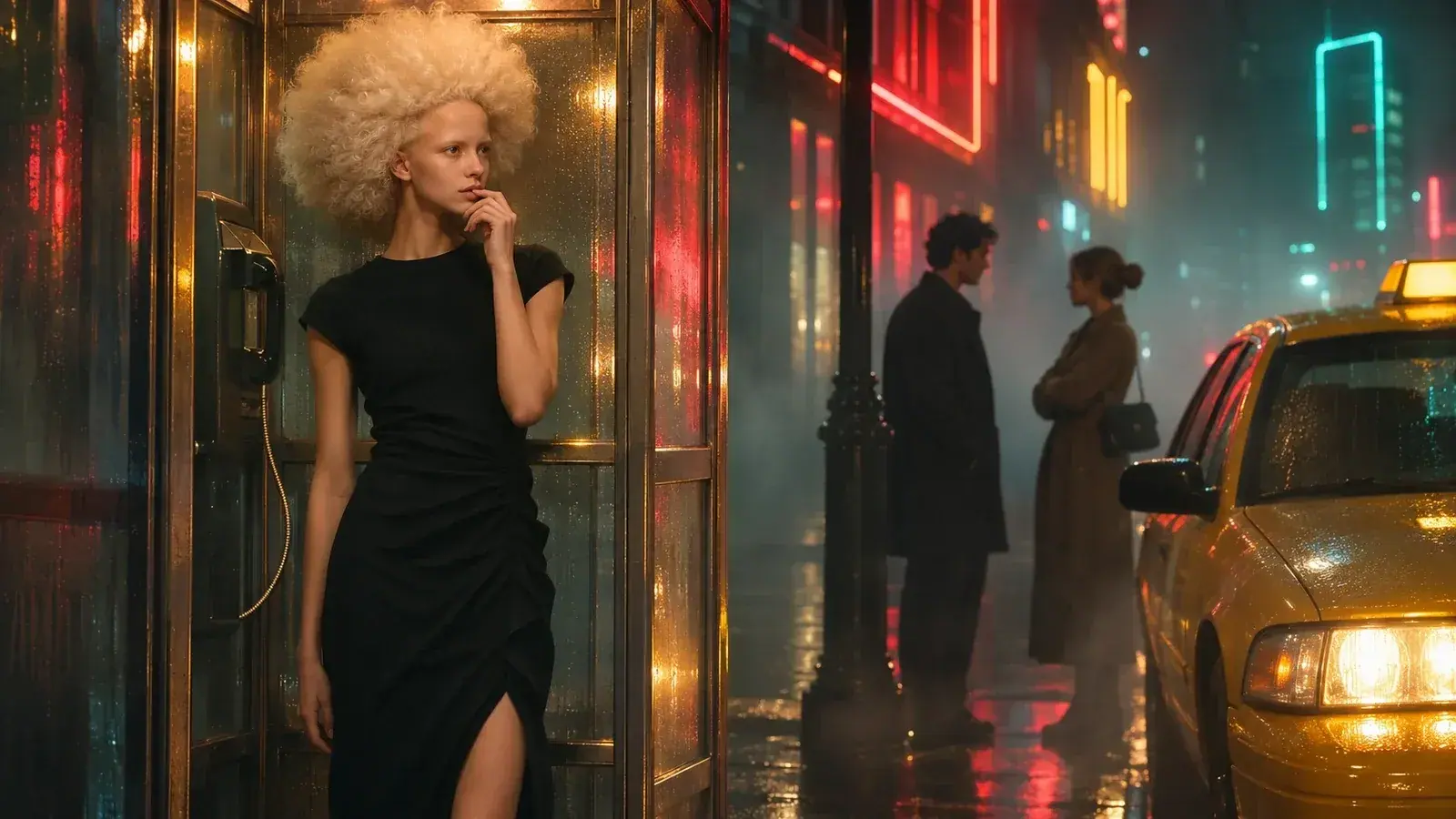
Imagine Imogen Sterling in an editorial image wearing a dark dress. The image can communicate a styling idea and show where the hem appears in that frame. It is not a fitting session and says nothing by itself about the garment's actual measurements. A separate product reference and measurement information remain necessary when accuracy matters.
Why apparent fit and measured fit differ
An image generator has to infer or reconstruct details from the material provided. A product photo may hide the back of a garment; a person's pose may obscure the waist; the image may not include the measurements or fabric properties needed for a physical fit estimate. Plausible folds are not, by themselves, evidence that the same folds will occur on a real body.
Researchers have treated size as a distinct problem. In a study of size-variable virtual try-on, the authors explicitly model relative physical sizes and evaluate their approach on a dataset of 1,524 images from 26 people. This is evidence about their research setup, not validation of every commercial try-on tool or guarantee of an individual result.
A system that accepts body and garment measurements may offer more relevant information than one that only transforms photographs, but its usefulness still depends on how those inputs are obtained, the method used and whether the result has been validated for the garment and body in question. Ask what is measured, what is inferred and what the provider has actually tested.
A practical way to check a result
Start with the garment's own size chart and stated dimensions, then compare them with measurements taken in the way the retailer recommends. Check whether the chart describes body measurements or the finished garment: those are different quantities. Where available, look for information about fabric stretch, cut and returns. None of these steps makes an image a physical fitting, but they give the decision a more solid basis.
Use the image to ask specific visual questions. Does the displayed hem correspond to the product reference? Does an oversized jacket remain oversized, or has the silhouette changed? Are closures, sleeves and other distinguishing details present? If the answer is uncertain, treat the image as a concept and return to the source product information rather than filling the gap with confidence.
For creative production, keep the approved garment references beside the output and review changes deliberately. Lyfera's guide to garment fidelity in AI fashion images addresses preserving the visible design; the additional question here is whether the resulting picture can support a claim about physical fit. It cannot establish that claim on its own.
What to ask before relying on a tool
Read the provider's explanation of the inputs and limitations. Does it use a generic body, a user photo, measurements, a garment pattern or some combination? Does it show a visualisation, recommend a size, or claim to simulate physical behaviour? Are validation results available for the specific use? Avoid assuming that a photorealistic image answers all of those questions.
Privacy matters too. A body photograph or measurements may reveal sensitive information, so check the service's data handling and retention terms before sharing them. For an editorial image, using an approved fictional talent and clearly identifying the scene as imagined can communicate the creative idea without presenting it as a customer trial.
Virtual try-on is most useful when its output is matched to its purpose. Use a generated picture to explore visual direction; use measurements, product information and an appropriate fitting process to decide how a real garment may fit. Keep the two kinds of evidence distinct.