Artificial identities · Lyfera · 2026-11-07
When a Room Shows the Passage of Time
How an imagined room can suggest time through the objects, spaces and small changes a creative team chooses.
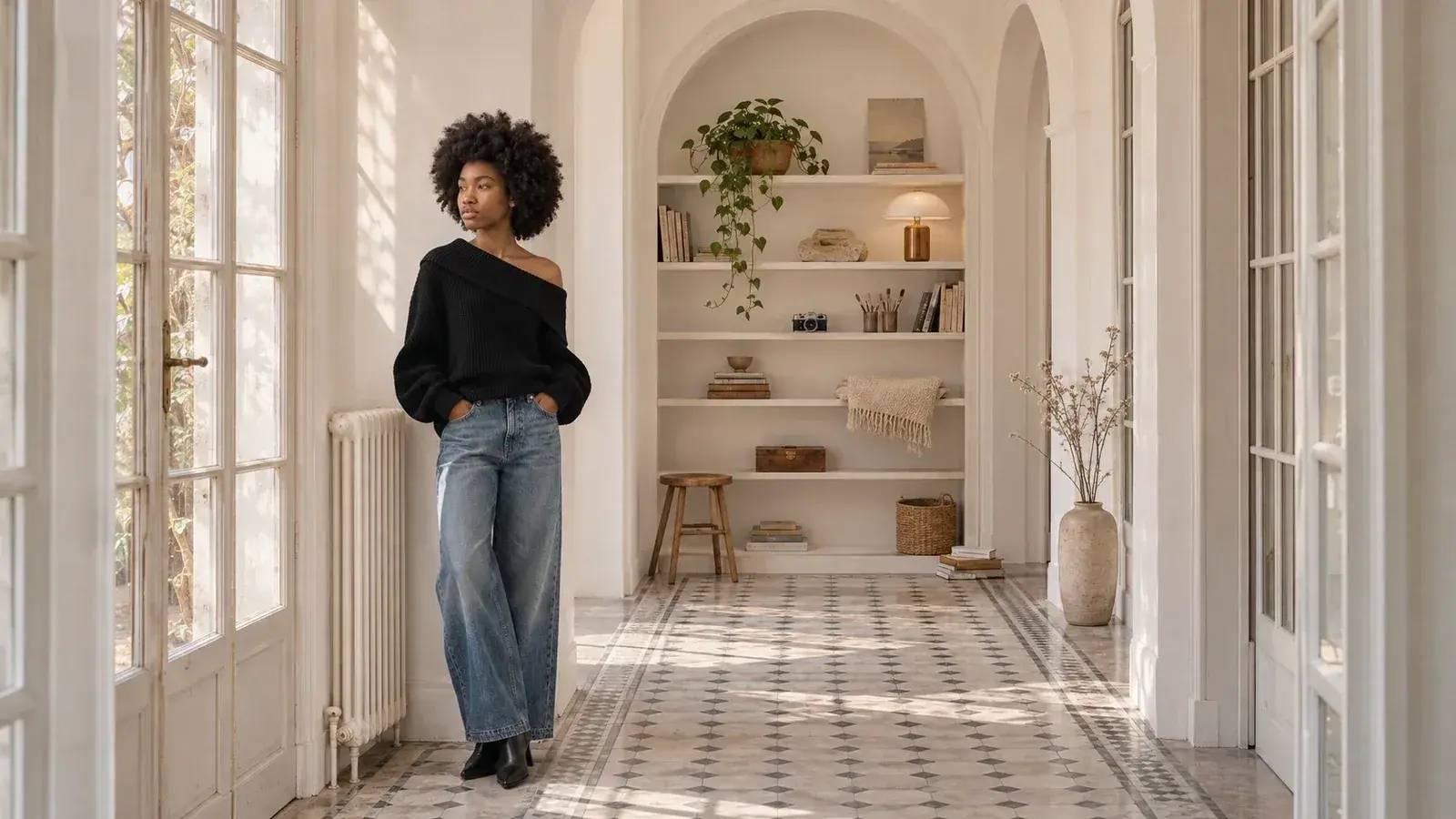
A room can stay in the same place while the life imagined around it changes. A chair moves closer to the light. A shelf becomes crowded, then spare. The wall retains a pale rectangle where a picture once hung. None of these details needs to announce a plot. Together, they can suggest that time has passed and invite a viewer to wonder what happened in between.
For a persistent artificial character, that possibility changes the work of making an image. A recognizable face and a familiar outfit establish continuity, but they do not by themselves explain how one moment relates to another. The room can carry part of that relationship. Its value lies in the choices a creative team makes about what remains, what changes and what is deliberately left unexplained.
The room is part of the story
Production designer Anna Falguères has described how she reads interiors through their colors, objects and light, imagining stories from the spaces people inhabit. That is a designer's perspective, not a rule for what every viewer will see. A room can suggest a history without proving one, and an object may mean very different things to different people.
Consider a hypothetical sequence featuring Lyfera talent Juefte Mboyo. In the first image, she stands near a low shelf in a quiet room. There is a single folded textile, a small vessel and an empty stretch of wall. In a later imagined image, the textile has been moved, a second object has appeared, and the light falls across a mark left by an absent frame. The composition does not tell us who moved anything. It gives the audience a small difference to notice.
The distinction matters because it avoids turning a staged image into evidence of a real experience. These are proposed scenes, not events in Juefte's biography. A story becomes stronger when its makers know the difference between a designed suggestion and something they have actually established.
Decide what is allowed to change
A useful starting point is to divide a space into three layers. The first is structural: the positions of doors, windows, major furniture and the direction of light. Keeping these relationships legible lets the audience recognize the room even when the camera moves. The second is habitual: objects that tend to belong in this place, such as a particular lamp or textile. The third is changeable: a book left open, a cleared corner or a different arrangement on a shelf.
These layers are editorial choices, not fixed categories. A lamp can be an anchor in one sequence and the meaningful change in another. The important question is whether the change has a role. If every object moves between images, the viewer may read the result as a new set rather than an earlier or later moment in the same one. If nothing changes, the sequence may feel like a set of portraits rather than a passage of time.
The makers of the film *Here* faced a related design problem at a different scale: production designer Ashley Lamont describes transforming one central room across eras. The film is a scripted production with its own methods; it is not a claim about how an image model will preserve a room. The useful lesson for an editorial team is the attention given to the relationships among furnishings, materials and time.
Let absence do some work
A missing object can be more expressive than an added one, but it should still be visible as a choice. Imagine the same shelf with a clean space in a row of books. That gap may invite a question; it does not establish a departure, a loss or an emotion. A caption that insists on those meanings would close down possibilities the image has not earned.
The same restraint applies to marks of use. Worn fabric, a shifted rug or a sun-faded wall can create a sense of accumulated time. Used everywhere at once, they become a generic effect. Select one or two details that are visible at the intended size, then check that they do not contradict the rest of the scene. A shadow should belong to its light source; an object should rest on a surface; a hand should make contact where the action says it does.
Keep a record of decisions, not invented memories
A small continuity note can describe the room's anchors, the chosen changes and the intended relationship between frames. It can also identify what remains open. That makes it easier for another editor to continue the sequence without treating a visual suggestion as a verified history.
This complements the work of keeping character continuity notes: the note records an editorial decision, while the room gives that decision a visible form. Neither replaces human judgment about what a character should reveal or when a scene needs explanation.
The most useful detail is not necessarily the most elaborate. It may be a chair turned toward a window, an object absent from a familiar shelf, or a little more space around a person than before. The room holds the frame; the change gives the audience somewhere to look.