Artificial identities · Lyfera · 2026-11-22
The hare and the fox give the same search a different priority
Chiara’s Leaf Hare and Gina’s Fuchsia Fox turn companion choice into a decision about which nearby find to pursue.
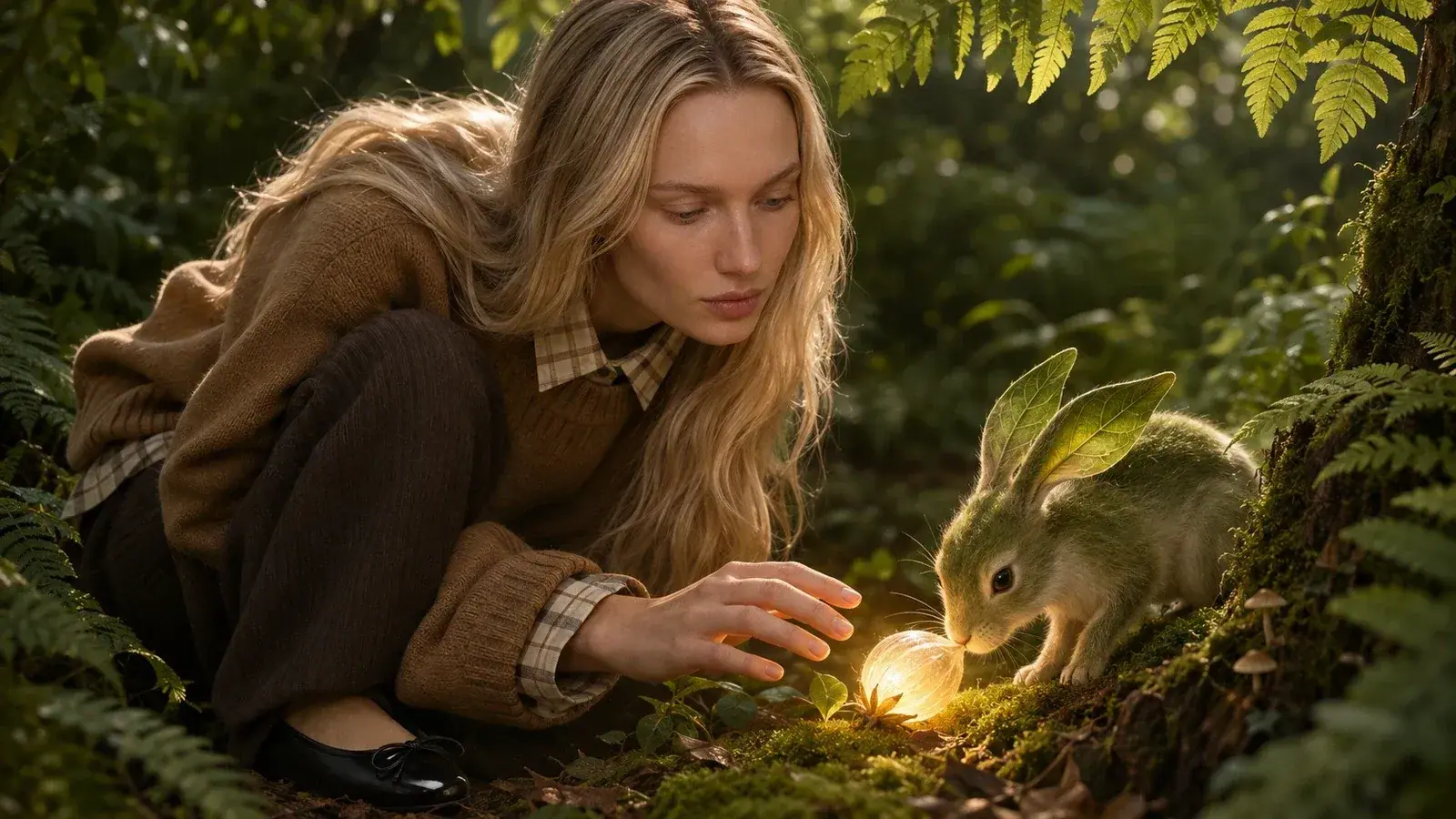
Press F beside Chiara Conti’s Leaf Hare and it can set off after a moonseed. Send Gina Zuliani’s Fuchsia Fox into a field of finds and its preference is a wind feather. Moonfold Menagerie gives both players a search action, but the companions do not make the same choice merely because they share a button.
To explore the companions’ different affinities, play Moonfold Menagerie.
In the solo expedition, a companion can search for a find within thirteen metres. The action spends one bond charge. Within the available choices, the animal favours its own speciality, and a successful affinity match earns ten extra points. The preference is a rule about the game’s finds, not a simulated account of animal psychology.
A preference needs a consequence
The recorded hare search returned a moonseed with its base reward and the affinity bonus. The pouch then held a seed the player could count towards restoring a missing light. The fox’s feather preference points towards another kind of benefit: a temporary movement boost. Different companions can consequently make the same patch of ground interesting for different reasons.
The preference does not remove the player’s responsibility to read the field. Distance, remaining bond charges and what the expedition currently needs still matter. A preferred find that is out of range cannot be treated as an automatic reward. A useful player decision might be to move closer before spending the next search, or collect a different nearby item personally.
Calling the animal back with Z cancels an unfinished search. That gives a dispatched action an inspectable interval: the player can see what the companion is pursuing and decide whether to let it finish. The expedition is not reduced to a menu selection followed by an unexplained increase in score.
Let the pair change how the ground is read
Moonfold has ten pairs, with seed, dew, feather and prism affinities distributed across the roster. Bram Veld’s Brass Badger favours prisms, while Celso Tembe’s Reed Crane favours dew. Those distinctions support a choice about the next journey without requiring a separate set of controls for every talent.
They also extend the question in what makes an artificial talent worth following. In a game, a character’s particularity can become a recurring relationship with an action. The player notices a difference because it changes what can be useful to do next.
The relay gives F another context: a companion can retrieve a fragment within four metres. That is a separate rule from the solo thirteen-metre find search. A reader should not transfer one range to the other simply because both actions send an animal away from the rider.
These behaviours were checked in the laboratory edition, including the hare’s returned seed and the fox’s selected feather. They establish specific choices under the game’s rules. The small pleasure is being able to anticipate the companion’s tendency, then decide whether that tendency fits the expedition the player is trying to complete.


