Artificial identities · Lyfera · 2026-11-22
Read the carrier before the name
A fragment on an animal’s back turns Moonfold’s companion design into information a partner can use from across the field.
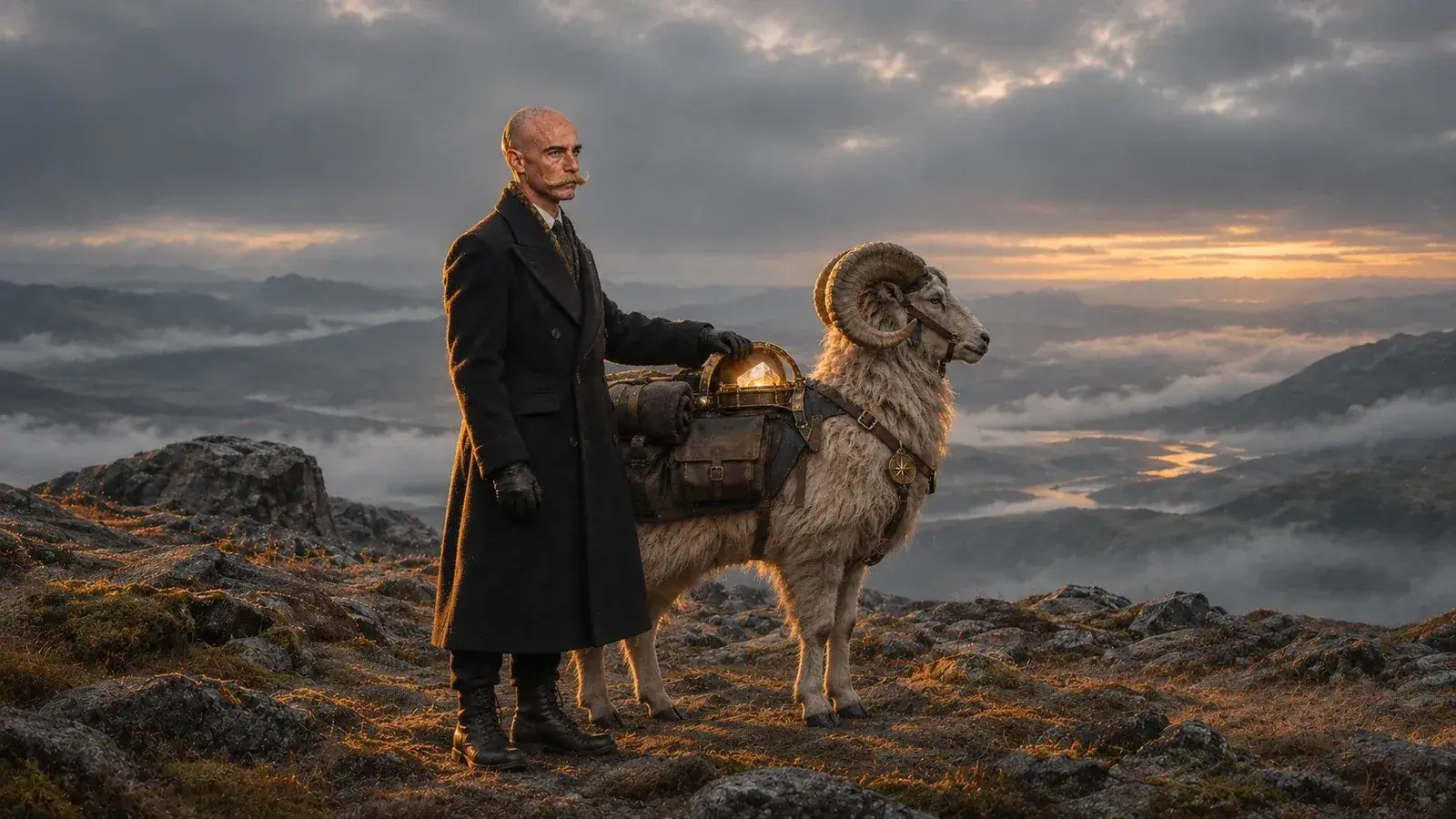
The amber fragment leaves the ground and appears on a companion’s back. A moment earlier it was a destination; now it marks a courier. In Moonfold Menagerie, that transfer has to be readable by the other player as well as by the person who collected it.
To see how a companion changes the rider’s silhouette, play Moonfold Menagerie.
The laboratory revision gives amber a crescent form and azure a droplet form, with different luminous columns and ground markers. Colour supplies a quick distinction, but shape gives another. When an animal takes possession, the carried object continues the same information in a new location.
A silhouette can carry a relationship
Chiara Conti’s hare and Gina Zuliani’s fox have different profiles. Their ears, bodies and movement make them easier to distinguish when facial features are too small to read. A saddle and its cargo establish an additional relationship: this is the companion associated with the fragment that now needs to reach the press.
The player may mount or dismount during movement, but the information does not depend entirely on inspecting the rider’s face. From across the field, an animal and a visible load can say more about the current task than a close likeness could. The character’s name remains available as another reference, rather than being asked to explain the whole state by itself.
That separation helps in a moving scene. Species identifies one part of the pair, a label identifies the remote talent, and the fragment identifies a temporary responsibility. A character can remain the same while the responsibility changes. The design does not need to turn the talent’s permanent outfit into a new uniform for every delivery.
Make the transfer visible on both screens
The documented two-browser WebGL check saw the fragment move to the courier’s animal and the compass switch towards the press. The other browser could see the courier. This tests more than the local collection animation: the new responsibility has entered the shared scene.
The room service assigns possession, while each client renders the result. If both players approached the same fragment, the accepted state still needs one owner. Giving each browser an independent attractive pickup animation would be insufficient if both subsequently believed they were carrying amber.
Our essay on hand and object continuity across movement asks whether an object’s relationship with a character survives a shot. Here there is another reader to consider. The object must stay understandable to a partner whose screen and viewpoint differ from the courier’s.
This article follows the laboratory relay, not a claim about public multiplayer availability. Its visual evidence supports a modest but useful outcome: a partner can look across the field and identify who has the thing the pair needs. The creature’s design has become part of the game’s language of responsibility.


