Artificial identities · Lyfera · 2026-11-02
Image to video AI: how to choose a useful starting image
Choose a starting image for an AI video by examining the action, object relationships and camera viewpoint, then review what the generated scene actually does.
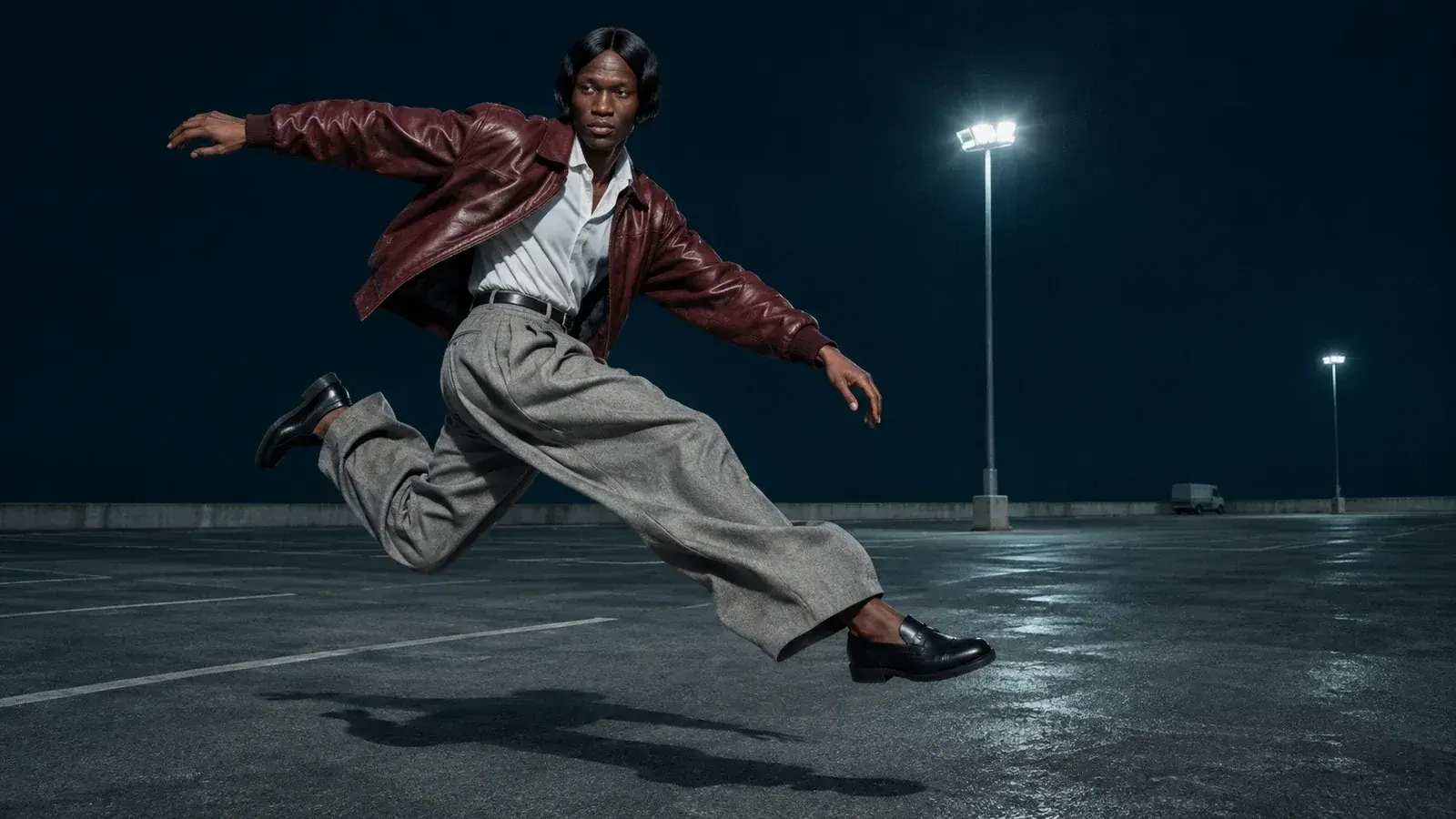
Image to video AI uses a still image as visual input for a generated moving sequence. The image gives the process something to work from, but it does not describe everything that should happen next. Before choosing a photograph for animation, decide what action the shot must show, which relationships need to remain visible and how you will judge the result. An attractive portrait may be the right introduction to a character and the wrong starting point for the action you have in mind.
For an artificial talent, this is a question of direction as much as image quality. The subject already has an identity; the new scene needs to give that identity something particular to do. Choosing the starting image becomes easier when you can explain what it contributes to that scene, rather than asking a finished-looking photograph to suggest the whole performance.
Choose the action before choosing the photograph
Consider a hypothetical short scene: a talent places a cup on a table, releases the handle and turns towards someone outside the frame. The intended action is modest, but it depends on several visible relationships. At the beginning, the cup is still being held. There is a surface on which it can be placed. The hand can withdraw without disappearing behind the cup, and the turn has somewhere to direct the viewer's attention.
Now imagine selecting a tightly framed beauty portrait. The face is clear, the lighting is considered and the cup is visible near the lower edge. The wrist and table are outside the picture. That photograph may work beautifully as a portrait. As a proposal for this particular shot, it leaves the central action difficult to inspect: we cannot see where the object is meant to land or how the hand relates to the surface.
A wider image could make those relationships available. It might show the cup held just above the table, the forearm, enough of the torso to read the turn and some space towards the off-screen listener. This is not a claim that a wider crop makes a generative model perform reliably. It makes the intended scene easier for a human editor to specify and evaluate. The useful comparison is between two pictures serving one action, rather than between an impressive picture and an unimpressive one.
There is an established production reason to think in sequences. ScreenSkills describes storyboard artists as planning shots through panels and maintaining continuity between them. A starting photograph can borrow that question without becoming a full storyboard: what must be understandable here for the next part of the action to make sense?
Make the starting state different from the destination
The cup scene changes if the selected image already shows the cup resting on the table with the hand withdrawn. That is a plausible destination, but it does not show the proposed beginning. Asking for the placement from that image would leave an important decision unresolved: should the character pick the cup up first, should the scene begin after the placement, or should the starting image change?
Resolve that choice in the brief. You could decide that the useful action is now the turn towards the listener, keeping the cup where it is. Alternatively, select a different image if putting the cup down is essential to the scene. Both are editorial decisions. Neither requires pretending that the supplied picture contains an event it does not show.
This is where a visual review can become more precise than another description of the character's appearance. Identify the state of the important object, the position of the relevant hand and the space the next movement needs. If those elements are hidden or ambiguous, say so. The picture may still be usable for a different shot; rejecting it for this action does not make it a failed photograph.
The same reasoning applies to clothing. If the scene depends on a sleeve brushing the table or a coat opening during a turn, the relationship needs attention before animation. The distinction explored in garment fidelity in AI images still matters: an appealing change to the clothing may undermine what the image is supposed to represent.
Give the subject and the camera separate jobs
A character turning towards a listener and a camera moving around a character are different proposals. Both can change the face's position in the frame, but they describe different events. In the hypothetical cup scene, a fixed viewpoint would let the viewer watch the hand release the handle and then follow the person's attention. A moving viewpoint might reveal the listener or change which parts of the action remain visible. Choose which contribution the scene needs.
Write the subject's action and the intended viewpoint separately before combining them into a production brief. This makes a disagreement easier to locate. If the cup stays suspended while the whole room shifts, the result has not delivered the placement merely because the image contains motion. If the camera moves to hide the hand at the crucial moment, ask whether the action is still readable rather than accepting the movement as a cinematic improvement.
A 2026 study of camera-motion control by researchers at the University of Maryland and Dolby Laboratories examined a reference-video approach to directing movement from a still image. Its system and evaluation are specific to that research, with acknowledged limits including a small, mostly non-expert interaction-study sample. It does not establish that a camera instruction will work in every commercial tool. It does reinforce the need to treat the requested viewpoint as a production choice that must be checked in the output.
Preserve identity while deciding what may change
The talent's identity should remain available independently of the starting scene. A frame selected for a particular gesture may obscure part of the face or place the subject at an unusual angle. That can serve the picture while making it a poor substitute for the approved identity references.
Keep those roles clear. The starting image proposes an arrangement; the identity archive provides the basis for recognising the continuing subject. Our discussion of keeping an AI talent recognisable across images develops that visual review in more detail. Here the additional task is to say what the scene is allowed to change: expression, attention and posture may evolve, while a different face or unexplained outfit should not quietly become part of the character.
For the cup scene, the editor might accept a small variation in the turn while requiring the same cup, sleeve and hand-object relationship. Another production could value the expression more than the exact path of the hand. Those priorities belong in the brief before reviewing the result. Otherwise, a pleasing output can persuade the team to abandon the action without noticing that it has changed the scene.
Review the transition, not just its opening frame
When the generated clip arrives, return to the intended change. Can you see the cup reach the table, the hand release it and the attention move elsewhere? Watch the passage at its intended playback speed, then inspect any uncertain contact more closely. A convincing opening image does not certify the frames that follow it.
If the action is present but its rhythm feels wrong, that is a different problem from a missing placement or a changing object. Our article on giving an AI character time to react considers how intervals shape a performance. Keeping the questions separate helps the next decision: revise the starting arrangement, simplify the requested action, reconsider the camera or adjust the sequence in the edit. Change the part of the proposal that the visible problem actually concerns.
Preserve the starting image, the intended action and a short reason for accepting or rejecting the clip. This gives a collaborator joining later a record of the choice, rather than a folder of unexplained alternatives. No new attempt is justified simply by the existence of an imperfect result; first decide whether the scene still needs that attempt and what it would test.
For a Lyfera mentor developing an artificial talent, the useful ambition is a scene that belongs to the character and can be understood on its own terms. The example here is an invented production exercise, not a demonstration of an automatic Lyfera editing workflow. A starting image earns its place by making the next creative decision clearer. The finished video still has to show that decision becoming an action.