Artificial identities · Lyfera · 2026-10-28
An artificial talent can have more than one future
An imagined later life can reveal what matters to an artificial character now. Comparing possible futures gives a mentor room to explore age, ambition and change.
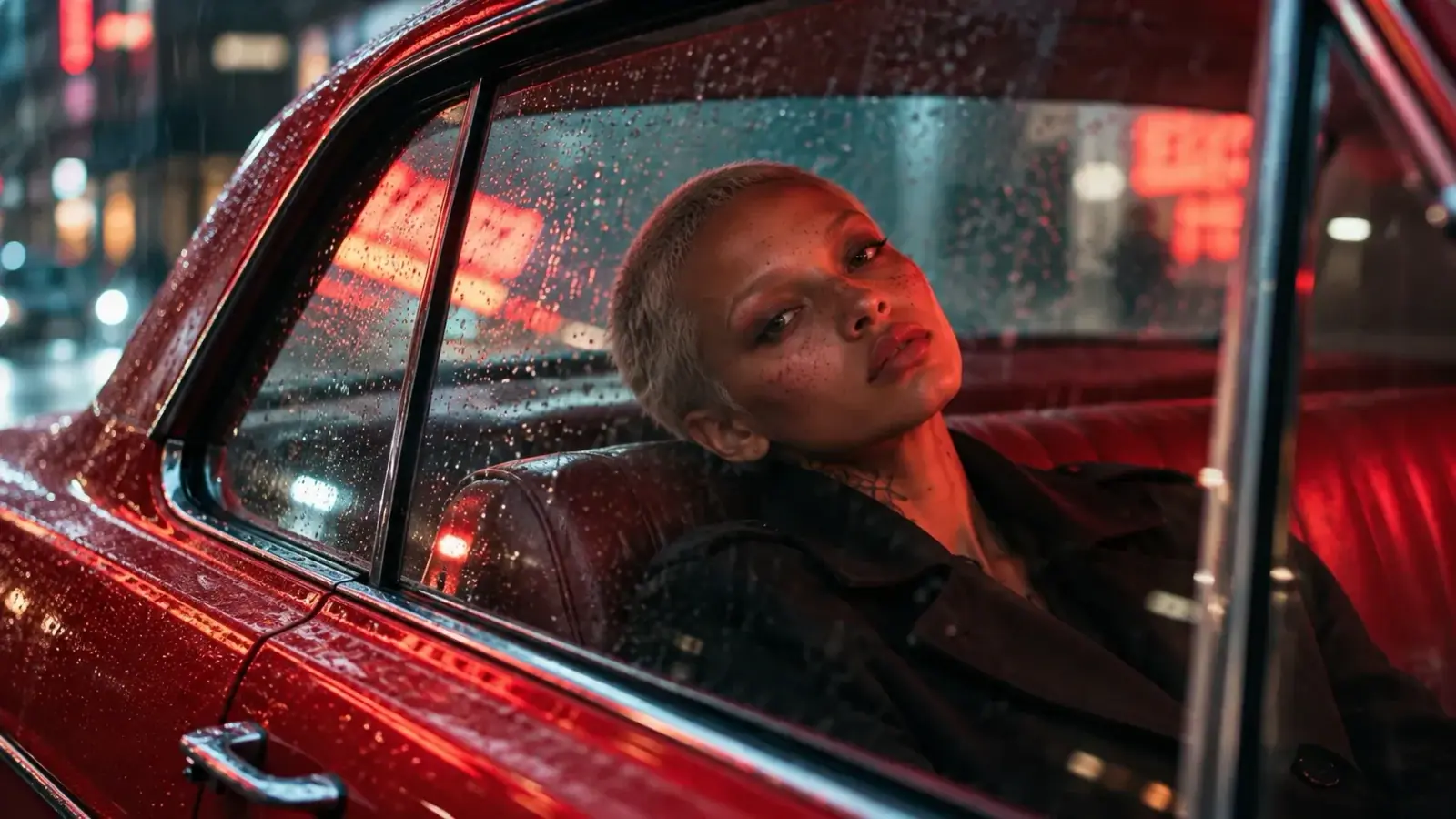
A portrait set twenty years from now can make a fictional life seem remarkably settled. The face has changed, the room looks established and a few well-chosen objects suggest a career. Before the caption says anything, the picture has already made decisions about what endured, what succeeded and what the character became. For a mentor developing an artificial talent, imagining a later life is an opportunity to examine those decisions while they are still open.
The attraction goes beyond seeing an older face. A future scene can bring a present preference into sharper focus. Which interest would survive years of repetition? What would the talent gladly stop doing? What might become more adventurous rather than more restrained? These questions give time a creative role. They also ask more of the work than a change in skin texture, hair colour or clothes.
A future self is a proposal
LaJuné McMillian's forthcoming exhibition To See for Oneself, scheduled to open at bitforms in New York on 29 October 2026, offers a timely point of departure. The gallery describes The Portal's Keeper as an avatar of the artist's future self, made using Unreal Engine, with an encounter shaped through visitor dialogue. This is the gallery's account of an upcoming work; we have not experienced the installation. Its particular use of a future self raises a broader creative question: what can an imagined later identity help someone consider in the present?
An artificial talent presents a different situation from an artist representing their own future. The mentor is responsible for a constructed character whose life has no independent, inevitable course. A later portrait therefore proposes a direction for that fiction. Its conviction comes from choices made for the work, and those choices can be reconsidered. A convincing image need not close the other lives the character could plausibly lead.
Imagine a hypothetical talent whose current work returns to overlooked spaces in a city. In one future scene, the talent has become a familiar public figure, photographing the same streets for an established publication. In another, they work quietly on a small collection of drawings and rarely appear in public. Both futures could grow from the same attention to place. They develop different relationships with recognition, routine and the work itself.
Age does not supply the missing story
It is tempting to let an older appearance do all the narrative work. A still posture becomes wisdom; a worn coat becomes hardship; a bright room becomes fulfilment. These are interpretations supplied by the composition. The imagined years have not demonstrated them. A future portrait becomes more interesting when the team can name what the subject is attending to, rather than relying on age to explain their expression.
The National Gallery's discussion of Rembrandt's Self Portrait at the Age of 63 is useful historical context. The painting dates from 1669. The gallery describes how its ageing face has invited readings of deep self-examination, while cautioning that the artist's motives may also have concerned the painterly challenges of depicting flesh. A face can sustain a powerful interpretation without proving the life story a viewer finds in it.
Return to the hypothetical city observer. Giving the older talent a thoughtful expression tells us little about what changed. Showing them turn away from a spectacular skyline to study a repaired doorway makes a more specific proposition. Perhaps the attention has become narrower and more patient. Perhaps the work has become less concerned with a recognisable view. The scene gives the reader something to interpret through a choice, with room to disagree about its meaning.
Physical change still deserves care. Recognition can depend on relationships between features, the carriage of the head or a familiar way of directing attention. Our discussion of keeping an AI talent recognisable across images considers the references that support that work. In a later-life study, the additional question is which changes belong to this interpretation of time. An older face does not have to arrive with an entirely new personality, nor does continuity require every preference to remain untouched.
Compare lives with different kinds of value
A useful comparison gives each proposed future enough substance to stand on its own. If one receives a richly imagined studio and the other a bare room, the presentation has already favoured an outcome. Develop the quiet drawing practice with the same attention given to the public career: where the work rests, what remains unfinished, what the character enjoys noticing. The alternatives should offer different satisfactions, rather than a successful life beside a warning about failure.
This can expose assumptions in the present brief. If every later version is wealthier, calmer and more prestigious, the team has chosen a particular account of development. There is room for that story, but there are others. A talent could become more playful, change disciplines or take pleasure in a modest practice that no longer seeks a wider audience. Such directions give the mentor something meaningful to choose among, even when none becomes a future commission.
The comparison can also remain small. The city observer might carry the same sketchbook in two scenes, using it privately in one and sharing it with a collaborator in the other. The difference concerns how the interest is lived. It does not require twenty years of invented awards, relationships and dramatic setbacks to make the character seem complete. A few coherent choices can suggest duration while leaving the intervening years available for later writing.
Let the study change what happens next
The immediate value of a future study may be a better next scene. Looking at the quiet drawing practice, a mentor might notice that the current talent has been described as observant without ever being given time to observe. The next piece could stay with a single doorway, long enough for a particular detail to matter. That choice would enrich the present character without promising that the imagined later life must follow.
If a future scene is eventually shared, its speculative frame should travel with it. A description can identify it as one imagined later chapter and state what the study explores. The distinction matters especially when a series also contains accounts of the character's established past, the subject of an AI character's editorial history. Readers should be able to place the work in time without treating an experiment as an announcement of what the talent will become.
An artificial identity can develop through the possibilities its mentor takes seriously. Imagining a later life offers a way to examine ambition, attention and change before committing the character to any of them. The most useful future portrait may leave the team with a new reason to care about the next ordinary moment.