Artificial identities · Lyfera · 2026-11-25
The next image changes the face you just saw
A reaction can acquire a different meaning without a new expression. The image beside it is part of directing a recurring character.
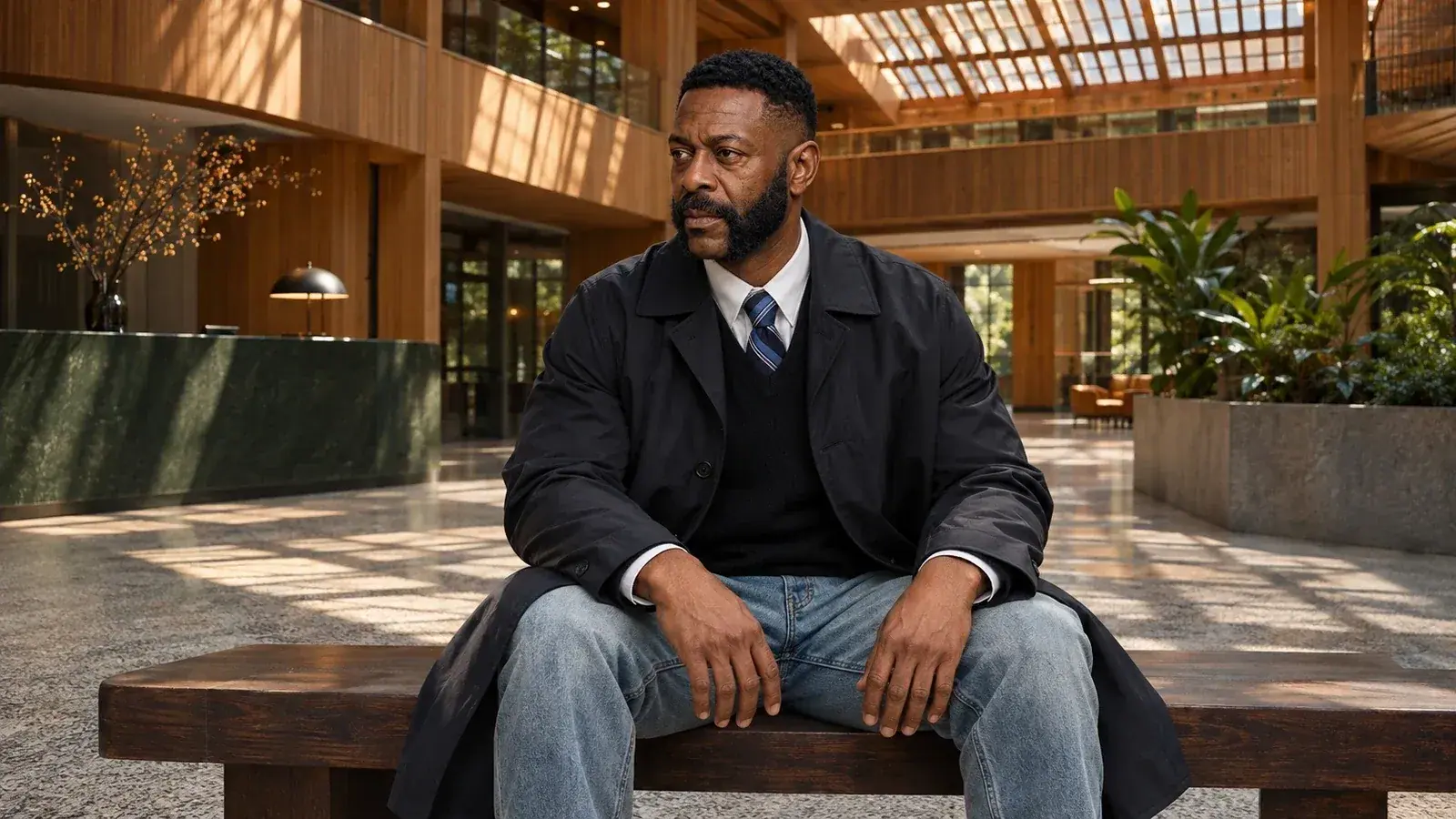
A man looks across a room. Cut to a carefully wrapped object waiting on a counter, and his stillness might begin to resemble anticipation. Cut instead to that object opened and abandoned, and the same pause might invite disappointment. Nothing in the facial performance has been replaced. What has changed is the relationship the edit asks us to make. For a recurring artificial character, this gives the person directing the work a consequential choice before requesting a more expressive face.
Imagine Kwesi Boateng, one of Lyfera’s artificial talents, in this proposed sequence. His mouth stays closed and his gaze stays level. The two versions would use the identical shot of him, with the same duration, framing and sound. Only the adjoining image would change. This is a hypothetical editing exercise, not a scene Kwesi has performed or an audience response we have measured. Its purpose is to make the decision visible: are we asking a face to supply a feeling, or asking the sequence to suggest a situation?
A relationship arrives with the cut
A close view of a person and a close view of an object do not automatically belong to the same story. Their proximity in an edit invites a connection, but the nature of that connection needs attention. Is the person seeing the object now, remembering it, imagining it, or somewhere else entirely? A matching direction of attention can support one reading. A conspicuous change of location can interrupt it. An attractive insert may therefore introduce a relationship that the rest of the work cannot sustain.
Consider the wrapped object again. If a wider shot has already placed it on a counter beside Kwesi, cutting between them can develop an established situation. Without that wider view, the sequence leaves more work to inference. That ambiguity may be useful in a short portrait film. It may also be a problem in a scene whose practical action should be clear. The editor’s question is not simply whether the insert looks beautiful, but what knowledge its position gives the viewer permission to assume.
This differs from giving a reaction time to develop. An extra second changes the opportunity to notice or reconsider an action. A different adjoining image changes what that action might be about. Keeping duration steady while considering adjacency makes those two decisions easier to discuss separately.
What the research actually supports
The Kuleshov effect names a familiar problem in film perception: a face is encountered in a context. In a 2017 behavioural study by Calbi and colleagues, viewers saw neutral faces within film sequences using neutral, happy or fearful contexts. Fearful contexts produced significant differences in valence and arousal ratings; happy contexts did not produce the same dimensional result. Emotion-category choices nevertheless tended to agree with both emotional contexts. That is evidence for context-sensitive interpretation under those conditions, rather than a promise that any neighbouring shot can make any face express whatever an editor wants.
There is a useful artistic limit here. Film scholar Murray Smith’s critique of the Kuleshov idea argues against treating performance as irrelevant. It is a critical argument, not an additional audience experiment. A face already showing a broad laugh does not become a neutral canvas because another image follows it. Direction still has to account for what is visibly present: a tightened jaw, an uneven breath, a particular way of holding the head.
For an artificial talent, preserving the approved identity is therefore only part of preserving a performance. Two generated portraits may depict the same recognisable person while differing in small expressive details. Using those portraits as if they were the identical reaction would confuse a change of context with a change of acting. An honest comparison keeps the actual reaction shot fixed.
An insert can overrule the intended encounter
Suppose the proposed film is meant to leave open why Kwesi has returned to the counter. A lingering insert of a damaged gift could narrow that uncertainty immediately. A sequence that once allowed curiosity may now suggest loss. Adding a caption explaining his motive would narrow it further. As with leaving a character’s motive open to the reader, uncertainty is something to direct through the information offered, rather than something a final line can simply announce.
The practical review can begin with the finished order of images and a modest question: what relationship does this cut suggest? Someone watching without the brief may describe a memory where the editor intended a present-tense encounter. That answer does not establish a universal response, but it reveals a possible reading worth examining. The next revision might be a clearer establishing shot, a different insert, or the removal of an explanatory image. It need not begin with replacing Kwesi’s expression.
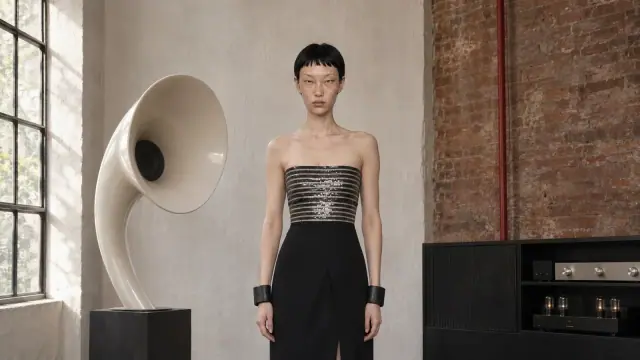
The photographs accompanying this piece offer two imagined settings for the same talent. Their pose, light and framing differ, so they are illustrations of contextual possibilities, not a controlled demonstration of the effect. Keeping that distinction matters whenever an appealing creative example sits beside a scientific finding.
Direct the sequence as carefully as the face
A persistent character becomes familiar through more than recurring features. The work repeatedly positions that person in relation to things, places and other lives. An insert can make a quiet face seem to wait for someone, judge something, or remember an earlier moment. Those are possible invitations to interpretation, not private feelings we can verify by looking at a picture.
Before asking for another expression, it is worth looking at the cut already on the timeline. The most revealing change may be the image placed beside the face. That is a form of human direction with a precise responsibility: deciding which relationships the work establishes, which it merely suggests, and which it leaves the viewer free to imagine.