Artificial identities · Lyfera · 2026-11-05
A camera move decides what the audience can notice
How a camera movement can reveal information, direct attention and change the way a scene is understood.
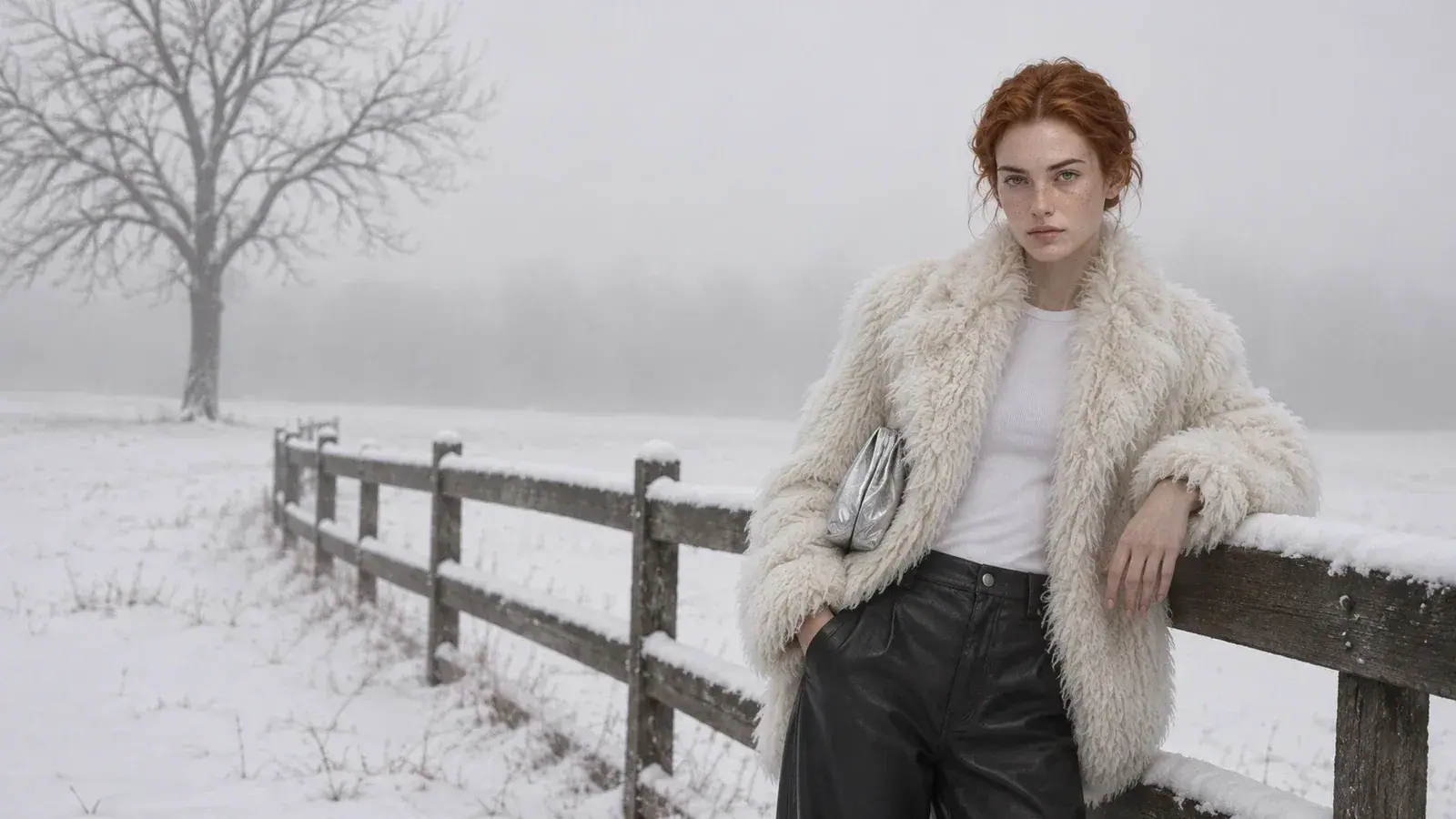
A character stands at the end of a corridor. In one version of the scene, the camera approaches slowly. In another, it moves sideways, revealing a second doorway. The character has not changed, but the audience receives a different piece of information. One movement asks us to pay attention to the figure; the other changes our understanding of the room.
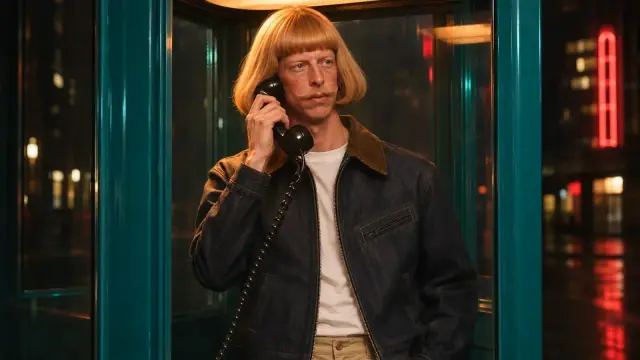
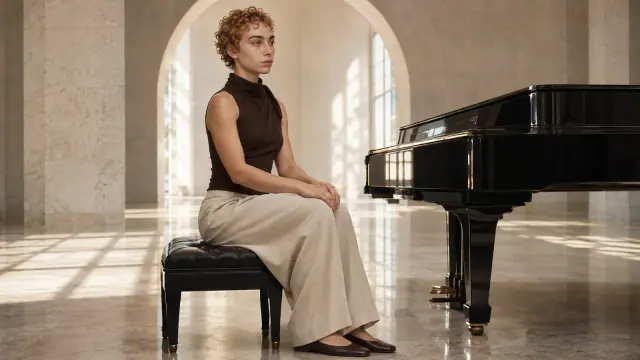
The images accompanying this article depict Lyfera talent Nell Faulkner in imagined scenes; they are not stills from a video test. These are imagined scenes, not tests of a particular tool. They show why a camera instruction is more than a request to make a still image move. It is an editorial choice about what becomes visible, when it appears and how much space the viewer has to interpret it.
Decide what changes for the viewer
The earlier discussion of scene direction begins with the action a character needs to perform. Here the question is how camera movement changes the information the viewer receives. Before describing a movement, a director can ask what the scene needs to reveal. If the important detail is a garment's construction, moving closer might make the seam easier to see, provided the generated image keeps that seam faithful. If the story depends on the distance between a character and another figure, a wider movement may communicate more than a close-up. Neither choice automatically improves a scene; its value depends on the question the image is meant to answer.
This also changes how a team evaluates an output. A smooth camera move is not enough if it hides the detail the shot was supposed to reveal, changes the garment or makes the character's position difficult to follow. The first frame, the movement and the final frame need to serve the same intention.
A reference describes timing as well as direction
A written instruction such as “move closer” leaves several decisions open: where the camera begins, how quickly it advances, whether it turns and when it stops. A reference clip can make those decisions easier for collaborators to discuss. It can also carry information the team did not intend to borrow, such as the original scene's atmosphere or composition. The direction should identify which property is useful and what must remain specific to the new scene.
An open-access research paper on camera-motion transfer explores transferring movement from a reference video to a still image. Its researchers evaluated their method against selected baselines and used separate perceptual and interaction studies. The latter involved twelve participants. Those results describe the research system and its test conditions; they do not establish that every production tool offers the same control or that a particular movement will work in another scene.
Preserve room for the character
Camera movement should not erase the identity it is meant to follow. In an imagined sequence, a sideward move might expose a profile that was not visible in the starting image. The team then has a new continuity question: does the resulting view remain recognisable, and does the outfit still behave like the intended design? A reference set can help define what to inspect, but it cannot replace looking at the actual frames.
The audience does not need to see every production decision. It does need a shot that makes sense on its own. For a recurring artificial talent, the human direction behind a movement connects the character's visual continuity with the story being told. The camera is one way of making that relationship visible: it can withhold, reveal or simply stay still long enough for a detail to matter.