Artificial identities · Lyfera · 2026-11-22
Recognising Chiara and Gina before reading their names
Moonfold’s cast uses portraits, figures, companions and labels to keep two players distinguishable as the scene changes.
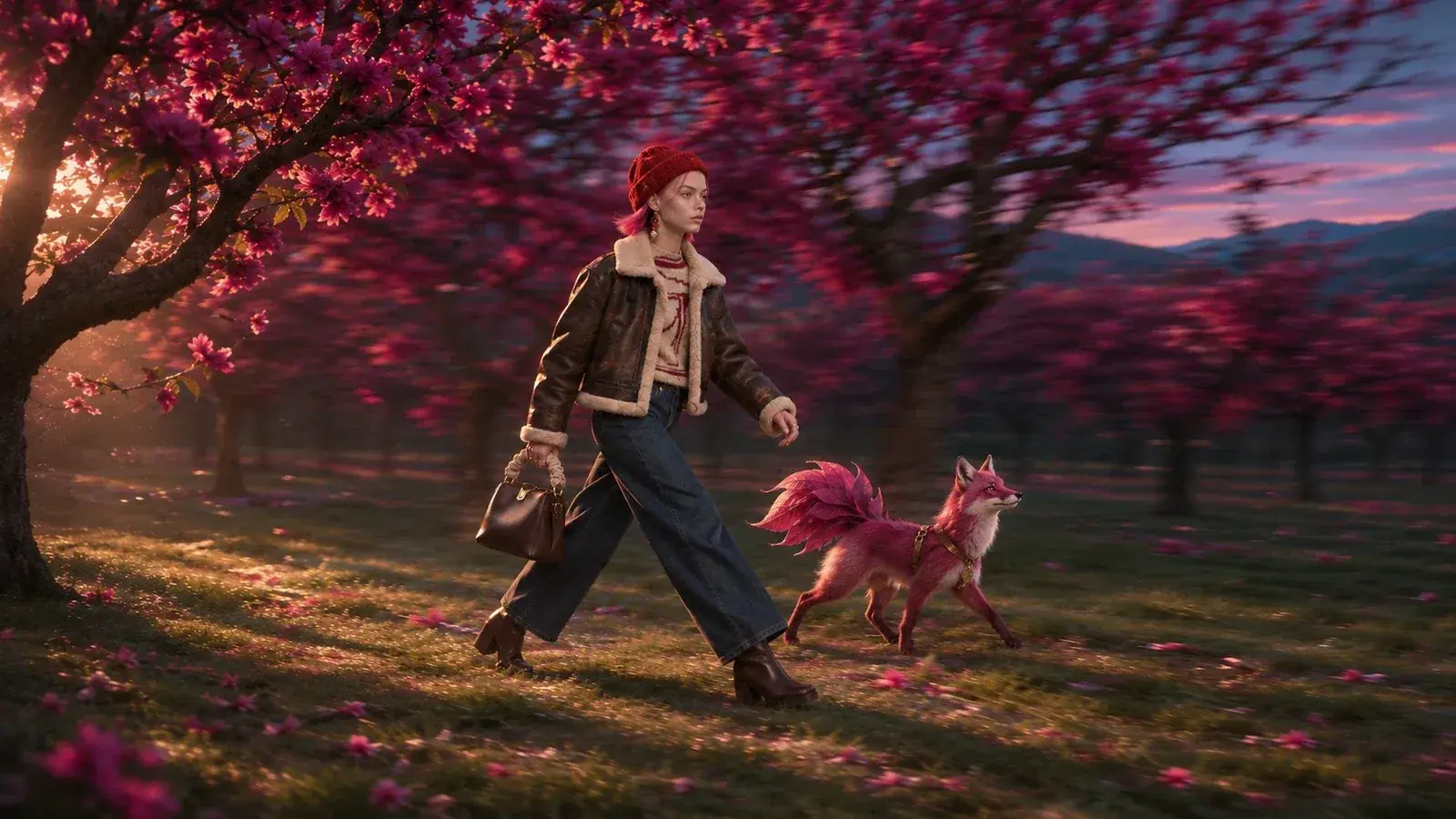
Chiara Conti’s pale hair and green clothing sit beside Gina Zuliani’s fuchsia hair and purple outfit in Moonfold Menagerie’s cast portraits. On the field, those same two figures have to remain distinguishable while they turn away, cross the camera and approach the press. The portrait has made an introduction; movement asks the rest of the design to keep it useful.
To follow the cast in motion, play Moonfold Menagerie.
The laboratory edition offers ten playable Lyfera talent–animal pairs. Chiara has the Leaf Hare and Gina the Fuchsia Fox. A player’s choice selects a particular combination of figure, portrait, companion and search preference. It is a role within this cartridge, not a claim that the talent has acquired a permanent animal companion in Lyfera’s wider story.
Recognition has several distances
A close view can carry hair, face and clothing details. From farther away, a rider’s outline and the animal beside them may do more of the work. The hare’s long ears and the fox’s distinct profile supply differences that survive a smaller figure on the screen. A name label provides another reference when the scene becomes crowded.
The shared WebGL frame in the revision record shows Gina and her fox alongside Chiara and the hare. Each browser could also see the other pair. That matters because recognising the selected figure alone would not establish that the multiplayer scene identifies a partner correctly. The returning player has to match the other browser’s presence with the person expected at the press.
Our earlier essay on a face becoming a whole figure considers what a portrait leaves for a three-dimensional interpretation to resolve. Moonfold adds a practical distance: the figure must still be readable when it is too small to inspect as a portrait.
Keep a character particular during a shared action
The models are articulated, so walking, mounting and recovering can change the relationships between their parts. In the laboratory model checks, all ten were loaded and taken through movement and recovery states. A successful load alone would have been a thinner result. The figure also had to remain coherent through an action in which its familiar front view was no longer guaranteed.
Those checks do not prove photographic identity at every angle or turn a stylised model into a digital double. The cast uses an intentionally simplified visual language. The useful question is whether the approved character relationships remain identifiable within that language, alongside the other nine figures.
The crew’s larger test used ten independent browser contexts and completed three stages. It demonstrated an identified cast sharing a room state on that setup. It was not a study of ten human players recognising one another under real network conditions.
Chiara and Gina make the design easy to read because their differences appear in more than one place. When a face turns away, a colour relationship, a companion and a label can continue the introduction. None has to carry the entire identity alone.


