Artificial identities · Lyfera · 2026-11-24
The distance inside a close portrait
A tight frame does not tell us how close the camera stood. Perspective gives a recurring character another way to meet the viewer.
A face can fill the frame without the camera being particularly close. That distinction is easy to miss when two portraits arrive on a phone at the same size. One seems to lean towards us; the other leaves a little more space around the features, even though neither shows much of the room. Before deciding that a recurring character has acquired a different face, it is worth asking where the image places its viewer.
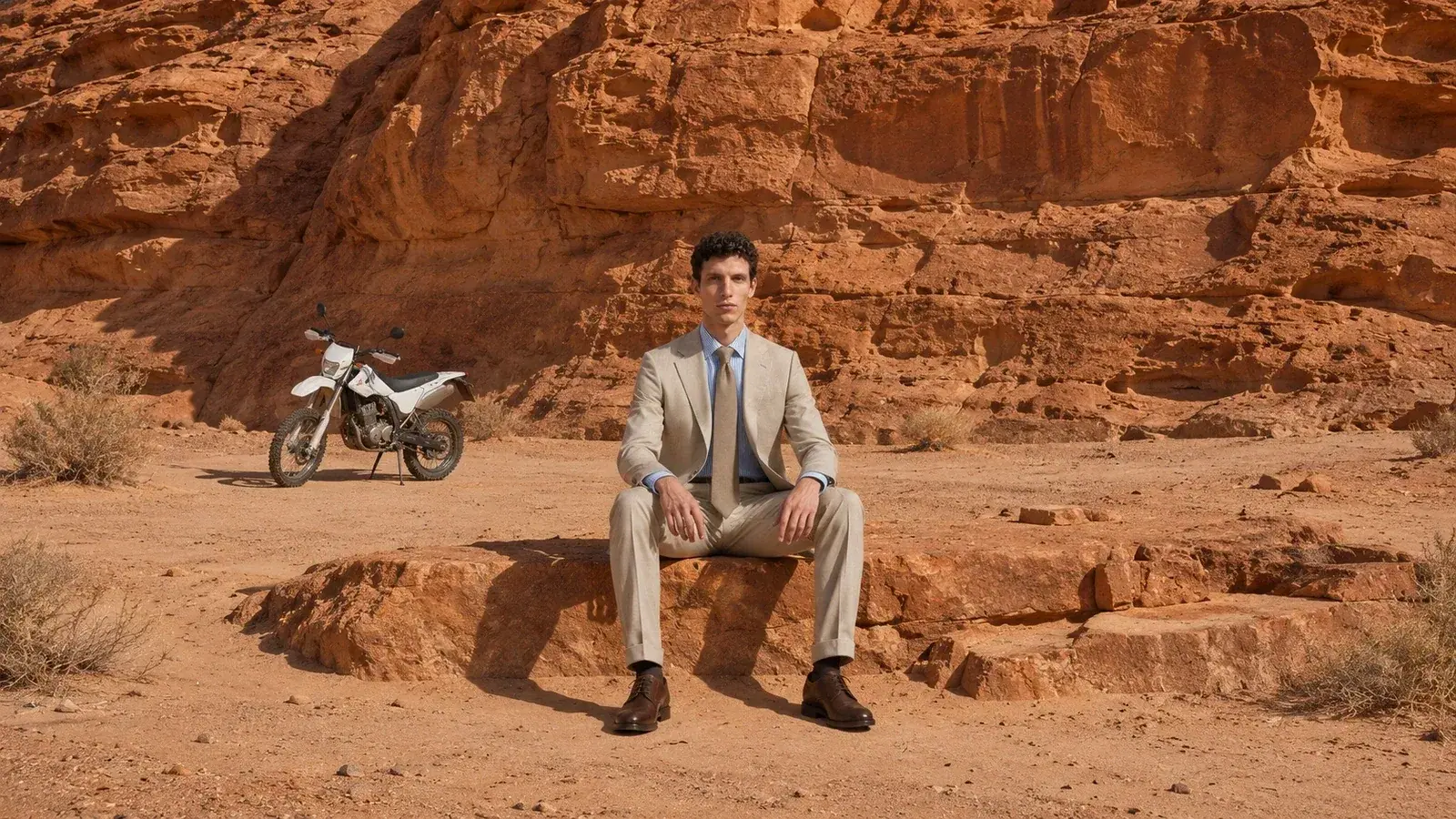
Consider an imagined portrait of Lyfera talent Emese Takács beside an orange sandstone wall. The setting gives the figure somewhere to sit, and the parked motorcycle gives the surrounding space a scale. Now imagine another photograph in which the head and shoulders occupy most of the picture. We have changed the encounter. But the tighter frame alone does not tell us whether the second camera approached the face or observed it from farther away with a narrower view.
The frame does not establish the viewpoint
In ordinary camera geometry, nearby parts of a subject appear larger relative to parts farther away. When the camera approaches a face, the difference between the distance to its nearest and farthest features becomes more significant. Moving back reduces that relative difference. The result can affect how the nose, cheek and ears relate on the flat image, while the person remains the same.
Hasselblad's portrait lens guide makes the distinction practical: choose the camera position for the perspective, then choose the focal length for the framing. A longer lens does not, by itself, confer a particular facial proportion. The familiar comparison between wide and long portrait lenses often also contains a change of camera position, because the photographer moved to keep the subject a similar size.
That is a useful question for an artificial portrait as well, although a generated image is not evidence that a physical camera or a specified lens was used. A lens description can suggest a visual treatment. The finished relationships still need to be judged in the picture. The relevant decision is whether this apparent viewpoint belongs to the encounter the human director intended.
Recognition can allow a change of distance
Suppose the imagined closer view makes the near cheek more prominent. The immediate response might be to make it resemble an approved front portrait exactly. That could correct a genuine identity error, but it could also erase the perspective the scene needs. Recognition depends on understanding what is changing, rather than requiring every appearance to reproduce the same flat arrangement.
There is a particularly clear demonstration in an open-access study of photographic comparison. Its authors photographed a subject from the same distance with two focal lengths; after cropping and resizing, the facial views aligned. The paper concerns forensic comparison, not creative casting, and its application here is limited to the optical distinction. It does not supply a test that certifies the identity of a generated character.
For Emese's hypothetical series, the approved views remain the reference for the person. The new image can then be considered as a view of that person from somewhere particular. A changed hairstyle, an invented jaw contour and a plausible perspective change are different editorial problems. Asking which one is present makes a correction more precise than asking the face to look more consistent in every respect.
Our essay on carrying a likeness into a whole figure considers the decisions a single portrait leaves unresolved in volume. Here the figure stays within photography; the question is what happens when the audience's apparent position changes.
Closeness is also a reading
A nearby viewpoint might make a portrait feel immediate or intrusive. A more distant one might suggest observation or composure. Neither effect is guaranteed. Expression, light, posture and the surrounding sequence can make a distant view feel intimate, or a very near view feel impersonal. The director has to decide which relationship the whole image offers, rather than assigning an emotion to a focal-length number.
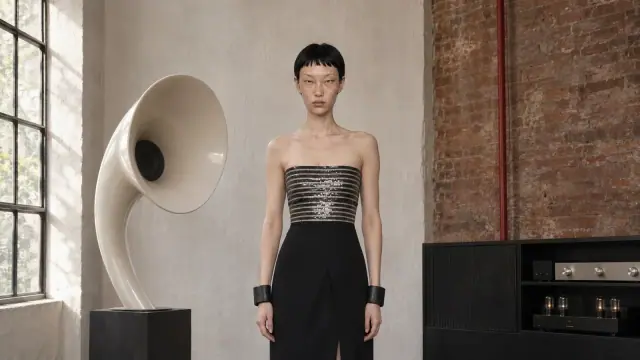
The two illustrations accompanying this essay are separate imagined treatments, with different settings and light. They are not a controlled lens comparison. Their useful contrast is between a figure situated in a place and a face given more of the reader's attention. A proper comparison of viewpoint would keep the intended identity and other relevant choices stable enough for the change to be understood.
Cropping an existing photograph changes the boundary around an already recorded viewpoint. It can remove the motorcycle and the sandstone without moving the observer closer to Emese. That leaves a useful choice for the next portrait: whether the story needs less of the place, or a different position within it. The two decisions can produce equally tight pictures and quite different ways of meeting the same character.