Artificial identities · Lyfera · 2026-10-15
An outfit can inspire without being copied
A constructed look can offer a way of combining clothes without becoming a shopping list. What can a reader carry into a different wardrobe?
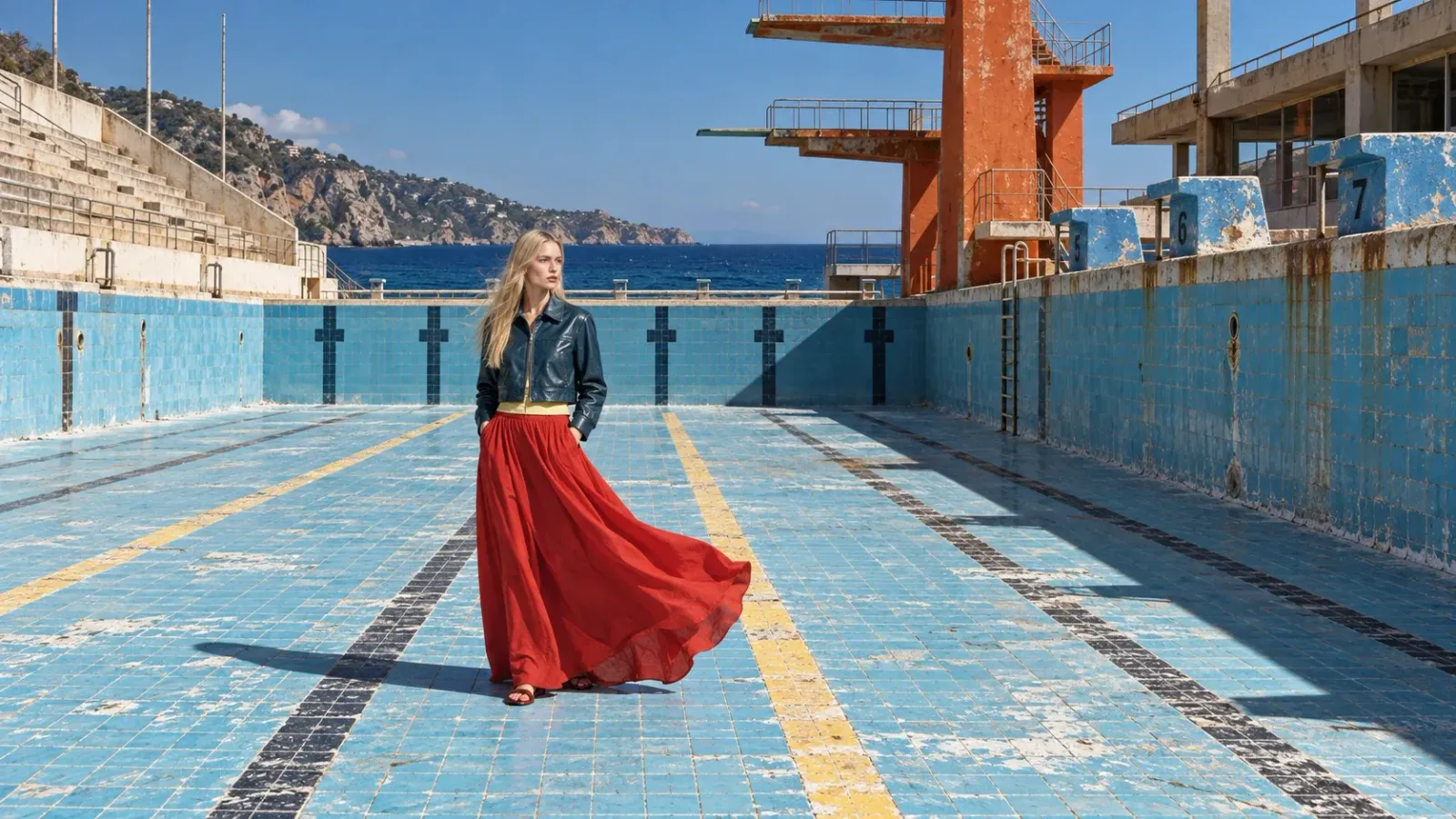
A pale strip of shirt appears between a short dark jacket and a long skirt. The arrangement is simple, but it gives the outfit a particular balance: a small interruption separates two larger areas of colour. Someone looking at the picture might want the jacket. Someone else might notice the interruption and try it with clothes they already own. A fashion image can offer both kinds of interest, provided its presentation makes clear what is available to take from it.
For an artificial talent, this opens a useful editorial question. An imagined wardrobe can contain almost anything. The reader's wardrobe contains particular things, with their own lengths, textures and limitations. What can pass between those two wardrobes when the exact pieces are different?
A new interview gives that question a timely setting. In her 14 October conversation with What's Fashion Technology?, Revy founder Kaylin Goddard describes connecting outfit inspiration with the clothes someone already owns, alongside shopping suggestions. This is her account of a commercial project, rather than independent evidence of its effectiveness. The narrower question for artificial character work is our own: can a constructed look make a styling idea available without requiring the reader to acquire its contents?
Find the relationship worth carrying across
Consider a hypothetical editorial featuring a fictional talent in the jacket, shirt and skirt described above. The team could present the outfit as a complete visual proposition. It could also develop a short explanation of the relationship that holds it together: the exposed shirt creates a light interval between the darker garments.
Those explanations invite different responses. Naming each item encourages the reader to identify objects. Describing the interval gives them something to investigate with other objects. A cardigan and trousers might produce a related division, although the resulting silhouette would be different. The reader would be interpreting an arrangement rather than assembling a substitute shopping list.
The distinction becomes clearer when the exact items are unavailable. Suppose the imagined jacket has an unusual fastening that cannot be found in an existing garment. If the fastening is the subject of the piece, it deserves attention as a speculative design. If the subject is the light interval beneath it, concentrating the caption on that relationship may make the image more useful. The team needs to know which of those ideas it is asking someone to consider.
This follows the question of purpose in art direction, but changes the destination of the explanation. The brief helps the maker construct the image. The published explanation helps another person decide what, if anything, they can carry into their own choices. It should remain intelligible after the original scene has been left behind.
A substitution has to be looked at again
Calling two garments similar does not establish that they will do the same work in an outfit. A shorter jacket changes how much shirt is visible. A soft cardigan may curve around the waist where a structured jacket holds a straighter edge. A pale patterned shirt may interrupt the dark areas differently from a plain one. The general idea can survive while the particular balance needs reconsideration.
In our invented editorial, a companion passage could compare two possible interpretations. One keeps the original narrow interval. Another lets much more of the shirt show and makes the middle layer the dominant part of the look. Neither needs to be described as a failed copy. They reveal what changes when the relation between the pieces changes.
The comparison should stay within what the images can support. A synthetic figure cannot establish how comfortable a combination will feel on a person, whether a hem will stay in place while walking, or whether the reader will like the result. Those questions remain available to the person trying the clothes. A useful explanation gives them something specific to observe, such as where the jacket ends relative to the layer beneath it, without prescribing a universal proportion.
This is also where a mentor can resist making the talent's body the measure of every outfit. The idea does not depend on another person sharing the character's proportions. A reader may move the interruption, choose a different length or abandon the combination altogether. The editorial has offered a way of looking; the reader decides whether it helps.
Keep the imagined clothes and the real objects distinct
A styling interpretation and a product representation still need different treatment. If the hypothetical piece names a real jacket, the image must preserve the features on which that identification depends. An explanation of proportion cannot excuse an altered fastening or invented construction. Our discussion of garment fidelity concerns that responsibility to the particular object.
Where the clothes are wholly imagined, the presentation can say so and keep the proposed styling relationship open. It should not attach a convenient product link merely because a shop contains something vaguely similar. That would change the reader's task from considering a composition to evaluating a purchase, with information the image has not supplied.
There is room for an editorial to include both an imagined look and separately documented real pieces. The relationship between them needs to be stated accurately. A real shirt might offer a similar contrast while differing in fabric, cut and length. Describing those differences respects the reader's judgement and avoids presenting resemblance as an assurance about what they will receive.
The same restraint applies to broader outcomes. An invitation to try existing clothes does not establish that a campaign reduces purchases or improves its environmental impact. It describes an activity someone can choose. Whether people take it up, what they buy afterwards and how they use their clothes are further questions requiring their own evidence.
Let the reader change the look
An artificial talent's appearance can be highly specific while the idea it offers remains open to interpretation. In the imagined series, the character might favour small areas of contrast. A later look could explore that interest through a visible sock, a narrow scarf or a different arrangement of layers. The recurring subject would be a particular attention to relationships, rather than a demand that every appearance introduce another indispensable garment.
These are proposals for editorial work, not a description of a wardrobe-matching service supplied by Lyfera. The human mentor develops the talent's appearances and decides what the writing makes available around them. That writing can explain a choice precisely enough for someone else to change it.
The useful final review returns to the reader with the different wardrobe. Can they understand why the pale strip matters without owning the pictured jacket? Can they see what to examine when their own combination behaves differently? A look earns that kind of usefulness when its idea remains available after its exact contents have been set aside.