Artificial identities · Lyfera · 2026-10-27
A familiar face has to become a whole figure
A sculpture gives an artificial identity volume, scale and a surface of its own. The move from portrait to figure calls for interpretation as well as recognition.
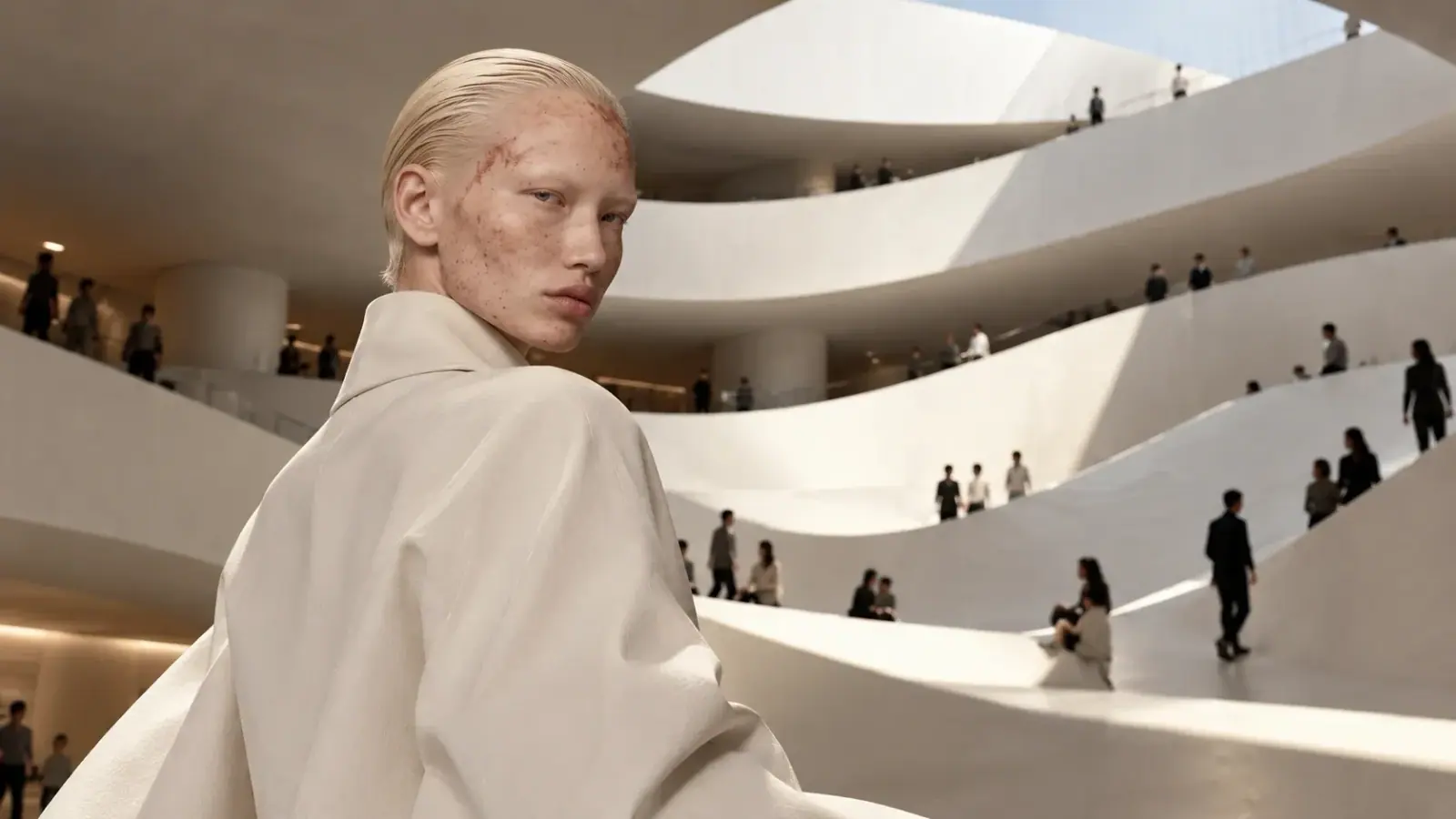
A portrait can keep its best side. Light gives the cheek a particular edge, a dark collar conceals the neck, and the frame ends before the pose becomes awkward. A sculpted figure has a different relationship with its audience. Someone can walk around it, look down on it or encounter its back first. What the photograph leaves unresolved becomes part of the object someone has to make.
For a mentor developing an artificial talent, that change can be creatively useful. A small sculpture need not impersonate a photograph in every detail. It needs a considered way of carrying the identity into volume, scale and material. The interesting decision concerns which relationships make the figure recognisable, and how those relationships can survive an encounter that no longer belongs to one camera.
The recently opened Faerdom: Now, As Ever at London's Quentin Blake Centre for Illustration offers a timely occasion to think about characters across forms. Running from 23 October 2026 to 29 March 2027, the exhibition brings together Fromm Studio's work with folklore, animation and 3D printed sculpture. The Centre describes a practice in which familiar figures meet contemporary digital culture. These are authored interpretations, not evidence of an AI conversion process. Their relevance here is the possibility of giving a character another material language.
The missing view is a creative question
Consider a hypothetical commission: a small figure of an artificial talent for a public presentation. The favourite portrait shows a long face, a swept ridge of hair and a slight forward inclination. One shoulder disappears into shadow. Enlarged on a monitor, the image feels precise. The sculptor still needs to establish how the head meets the neck, how the hair gathers behind it and whether the apparent shoulder slope belongs to the body or the pose.
For an invented identity, there is no original person waiting to be measured. Approved views can guide the work, but an area absent from those views remains a decision to resolve. A convincing first model might supply an attractive answer without establishing that it was already part of the character. The mentor and sculptor need to recognise that moment of invention before a plausible guess becomes the reference everyone else follows.
They could examine the nearest available views and agree on a proposal for the unresolved area. If the side view already establishes the neck and jaw, that relationship deserves to survive. If the back has never been defined, the new treatment should remain identifiable as a choice made for this work. The record can preserve both the earlier images and the newly approved interpretation, allowing later collaborators to understand what each actually establishes.
This extends the problem of keeping an artificial talent recognisable across images. There, the editor compares separate appearances. A sculpture asks those appearances to meet in one continuous form. Improving its front view at the expense of an implausible profile would leave the central problem unresolved, however familiar the photograph of the finished model might look.
A surface can explain too much
In the imagined commission, the portrait's dark collar could become a deep recess beneath the jaw. That might reproduce the photograph's contrast while making the head seem detached when the object is viewed from above. The sculptor could instead use a shallower transition, accepting that the physical form will receive its shadows from the room in which it stands.
The distinction matters because a dark area in a picture can describe several things: the colour of a material, the absence of light or a space between forms. Converting all three into the same painted mark might preserve the first impression from one position and create a contradiction from another. The team needs to decide what kind of information each visible feature is supplying.
There is a useful historical reminder in the Cantor Arts Center's account of Solid Pictures: Photosculpture and the Making of Modern Likeness, on view at Stanford from 17 September 2026 to 18 January 2027. François Willème's nineteenth-century process used photographic silhouette information and mechanical instruments to develop portrait figures. The museum's full press account also describes artisans refining surfaces and carving details such as hair and lace by hand. The photographic input did not remove the work of making a sculptural surface.
That history is context, not a technical equivalence between photosculpture and contemporary AI. For our hypothetical talent, it helps keep the commission open to the maker's judgement. A translation into volume involves choices that deserve attention in their own right, rather than being treated as imperfections on the way to an automatic copy.
Let the size change the drawing
A small figure also changes what a detail can contribute. Suppose the invented talent's portrait depends partly on a fine line beneath the eyes. At the proposed display size, that line might disappear, or become a heavy painted stripe. Enlarging it until it can be seen would preserve its presence while changing its effect. Omitting it might leave the proportions of the brow, nose and lower face easier to read.
Neither response follows automatically from the source image. The team could compare a restrained version with one that retains more facial detail, looking at each from the distance at which visitors will encounter it. A close photograph can help inspect the modelling, but it should not become the only basis for choosing an object intended to sit on a table across the room.
The same applies to the hair. Individual strands may be less useful than the direction and weight of the swept ridge. Giving that larger form a clear silhouette could carry something recognisable into a simplified figure. The result would be an interpretation with a declared visual language, rather than a miniature judged solely by how many photographic details it appears to contain.
Our discussion of a point of view in AI fashion photography asks why the decisions in a picture belong together. The sculptural commission needs a comparable intention: perhaps a quiet, concentrated presence, expressed through the inclination of the whole figure and a restrained surface. That intention can guide simplification without turning every difference from the portrait into a defect.
Approve the encounter the object offers
Before treating the imagined figure as another established appearance of the talent, the mentor should see it from several positions under ordinary display light. The front may carry the familiar face; the side reveals the posture; the back determines whether the hair and clothing form an intelligible whole. The useful review moves between these views and the complete object, keeping the agreed interpretation beside the source images.
This is a proposal for a separate sculptural commission. Its value would lie in giving the identity a particular kind of presence. A successful figure might surrender the portrait's carefully placed shadow and many of its smallest marks. In return, it would give the visitor something the original image cannot: a familiar character whose form continues when someone chooses to look from somewhere else.