Artificial identities · Lyfera · 2026-11-22
Noam has to perform the sound before he can file it
Foley Negative separates settings from a recorded take, making a sound archive hold the result of contact rather than a description of intended contact.
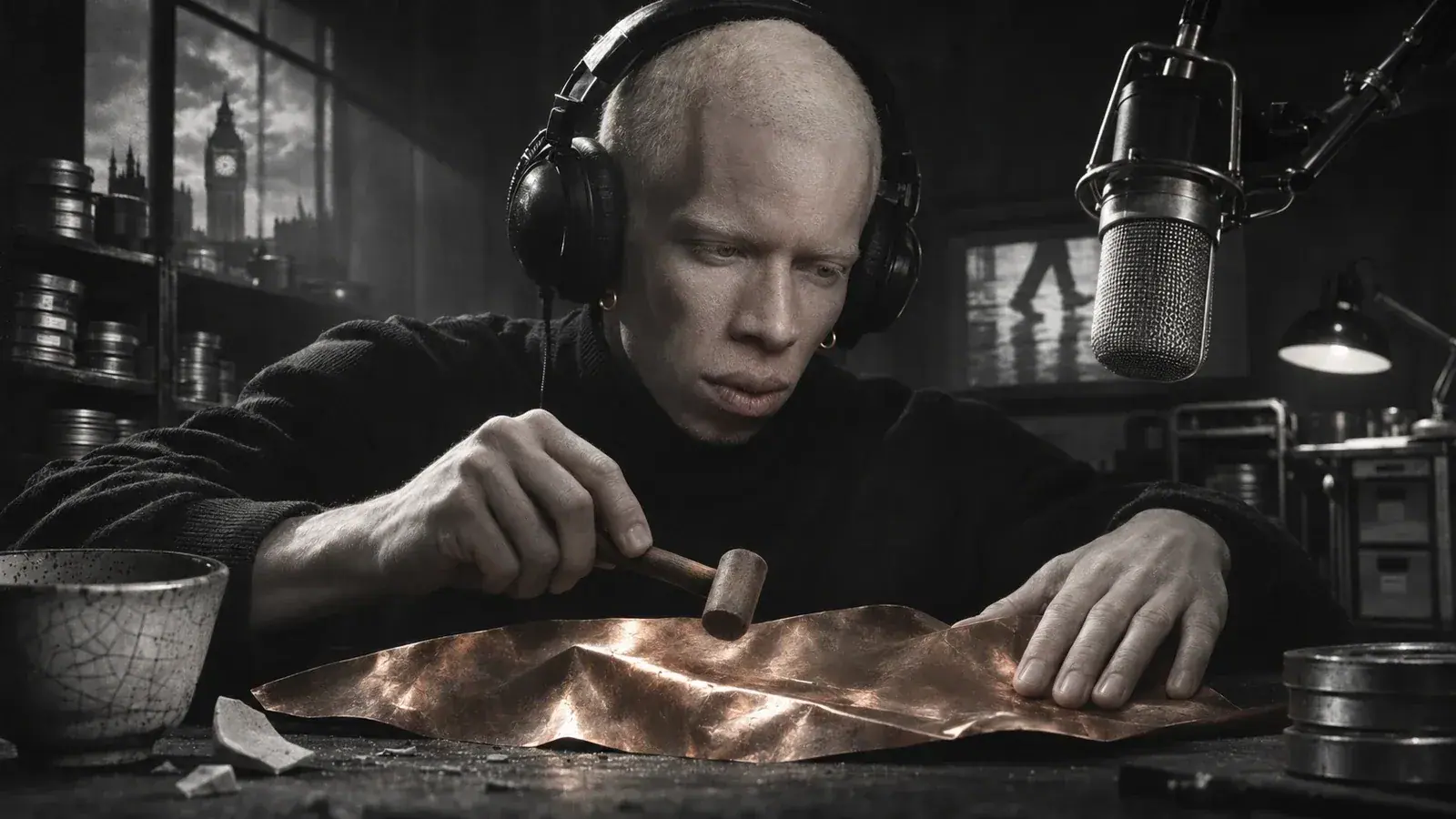
Noam Krell can change the damping control after striking the copper, but that does not alter the take already recorded. Foley Negative asks for a new performance when the settings change. The file is a trace of an action, not a live reflection of whichever values happen to be selected now.
You can play Foley Negative to hear the reference and try the three surfaces at the bench. Ceramic, folded copper and slate respond differently, while felt, wood and steel change the attack produced by contact.
Two traces describe different parts of the sound
The time envelope shows how the sound’s energy develops and fades. The resonance display shows how that energy is distributed across bands. Together they help distinguish a long contact from a material that continues ringing after the contact has ended.
The game also describes the timbre, attack, contact time and source decay in text. Muting the audio leaves those comparisons available. The puzzle can ask the player to reason about a sound without making hearing its only channel of evidence.
A hypothetical short metallic strike followed by a long tail cannot necessarily be reproduced by holding a soft striker down for longer. Duration of contact and duration of resonance are different characteristics. The bench’s controls let the player test those differences separately.
A trial is not yet a submitted file
Listening and bench experiments are free preparations. Filing a recorded take commits it for comparison. A rejection gives directions for the attributes that need attention, then leaves the player able to perform another take.
Later files introduce reflections and tighter tolerances, while accepted deposits unlock additional comparison tools such as attack or tail isolation. These help the player hear or inspect a more specific part of the relationship between source and response.
The archive preserves the accepted take and allows it to be played again. Noam’s bench thus makes a useful boundary tangible: a recipe is a set of choices, a performance is their execution, and a recorded object is the result that execution actually left behind. The file becomes convincing when the player can connect all three.


