Artificial identities · Lyfera · 2026-11-11
A doorway can give a character somewhere to go
How a threshold can connect an artificial character to a space and leave a story open.
A doorway is a small decision with consequences for an image. Put a figure in the opening and the viewer can see two places at once: the space they occupy and the space beyond. The frame becomes less like a backdrop and more like a choice about where a story could continue.
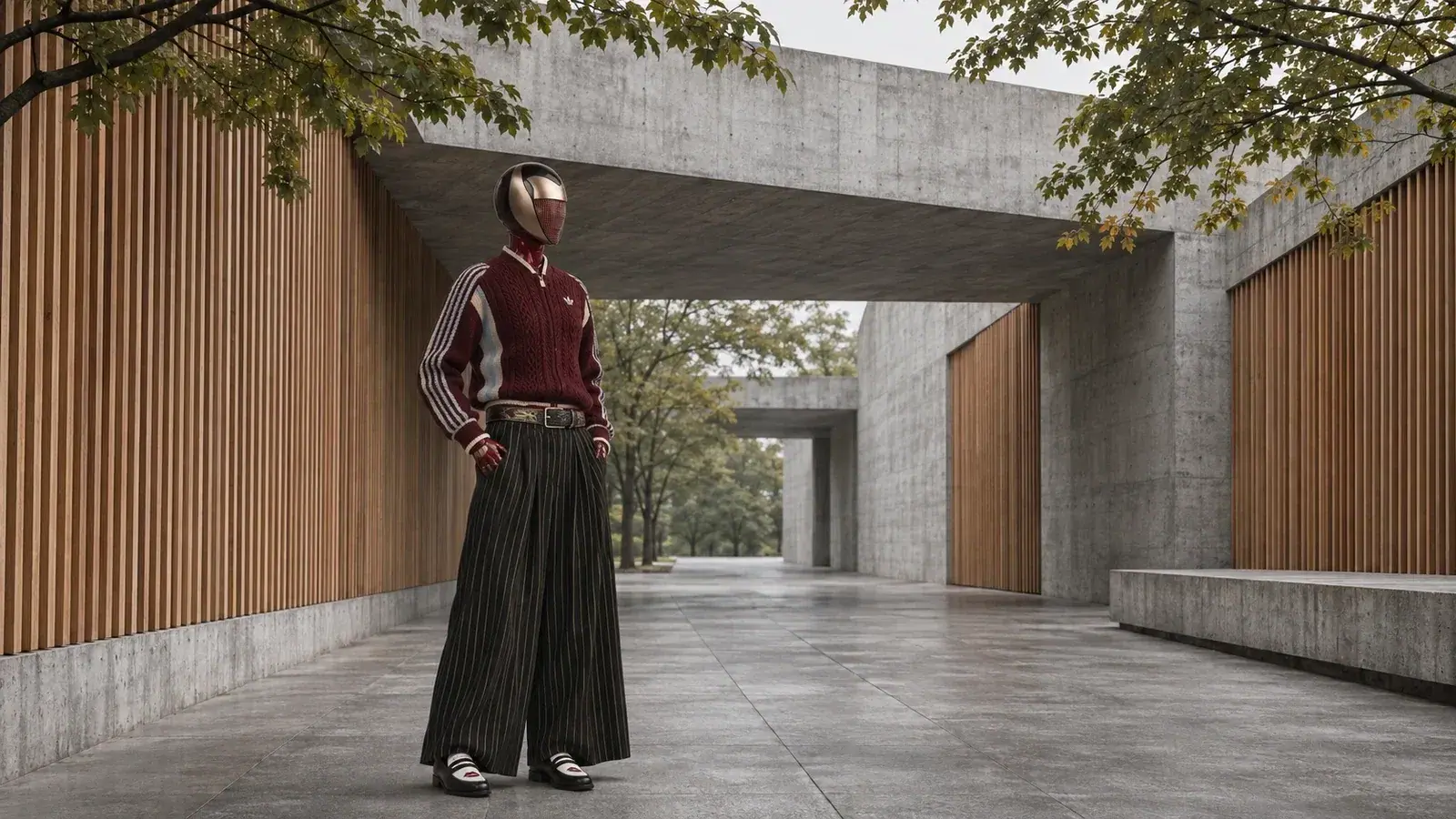
Imagine Aava Lehtonen in a concrete passage edged with timber. The figure is still, but the corridor leads the eye away. It does not tell us where Aava has come from or what will happen next. Those details are left open by a composition that makes a destination possible without claiming that an event took place.
The space between two places
A threshold can be a door, a passage, a curtain or simply the gap between two walls. What matters is the relationship it establishes. The opening offers depth, while its edges contain part of the scene. A figure beside it can appear connected to both spaces even when nothing in the picture moves.
A Yale teaching resource on framing describes how framing, setting and light work together to shape what a viewer sees. A wider view gives the surroundings enough room to matter. Move closer and the opening may become an abstract frame around a face or silhouette. Neither approach carries a fixed meaning. The same passage can feel inviting, exposed or quiet depending on light, scale, pose and the space the photographer leaves visible.
A frame within a frame
The imagined images accompanying this story place Aava in two different relationships to architecture: a broad passage and a closer view against a translucent surface. They are constructed editorial scenes, not documentation of a visit. Their difference is useful because a change of distance changes which part of the world the reader can consider.
This is distinct from the story a gaze leaves outside the frame. A gaze can direct attention toward something unseen. An opening makes a possible route visible within the picture. The two can work together, but neither proves what a character is thinking.
Let the viewer finish the route
When directing an artificial character, a team can decide how much of the far side to reveal and whether the character belongs in the foreground or recedes into the architecture. They can also decide that the threshold is not needed. A familiar doorway adds little if it merely fills an empty background.
A useful image leaves the viewer with a relationship to explore, not a riddle that must be solved. As with a crop that changes what an image can say, the edge is an editorial choice: it shapes the space available to a character and the freedom available to the reader.